

Why you can’t sleep — the TCM pattern map for insomnia
Why you can’t sleep — the TCM pattern map for insomnia
If you know the experience of lying awake for hours, mind racing while your body begs for rest, you’re not fighting a broken machine — you’re navigating a complex regulatory system that’s lost its balance. Western medicine calls it insomnia; TCM sees it as the Heart floating without an anchor, and that distinction changes everything about how you think about solutions.
This post walks through three dominant TCM patterns that drive sleeplessness: Heart-Blood deficiency, Heart-Kidney disharmony, and Liver Qi stagnation converting to heat. We’ll map each pattern to its symptom signature, explore the acupuncture points and herbal strategies that classical medicine has used for over 1,800 years, and ground the discussion in what the research actually shows about these approaches.
The Western picture of chronic sleeplessness
Chronic insomnia affects roughly 10–15% of adults globally, with sleep-onset difficulty and early-morning awakening as the two predominant presentations. The standard medical model conceptualizes this as either a hyperarousal disorder — where the nervous system remains stuck in “fight or flight” mode — or as a circadian rhythm disorder, where the body’s internal clock drifts out of sync with environmental cues. First-line treatment typically involves sleep-hygiene education and cognitive-behavioral therapy for insomnia (CBT-I), which has the strongest evidence base with effect sizes comparable to or better than medications in the short term.
Pharmacologic interventions — benzodiazepines, “Z-drugs” like zolpidem, orexin antagonists, and melatonin receptor agonists — offer symptom relief for many patients but carry well-documented trade-offs: tolerance and dependence, next-day cognitive impairment, and limited durability of benefit once treatment stops. For patients who don’t respond to first-line approaches, or who prefer non-pharmacologic strategies, integrative options gain attention. The gap isn’t that TCM offers “alternatives” to evidence-based care; it’s that TCM offers a pattern-based map for a heterogeneous condition that western diagnosis treats as a single entity.

The TCM reframe: sleep as a Heart-Kidney-Household negotiation
In TCM theory, the Heart houses the Shen (心藏神) — the aspect of consciousness responsible for wakefulness, cognition, and emotional regulation. Sleep occurs when the Shen can descend and rest; insomnia happens when it floats upward. But the Heart doesn’t operate in isolation. Two regulatory axes matter most:
Sleep requires two things: enough nourishment (Blood and Yin) to anchor the Shen, and enough warmth and relaxation to let the Liver release its grip at night. When either fails, the Heart floats.
The first axis is the Blood/Yin reservoir. If the Heart’s substrate is depleted — from chronic stress, blood loss, poor nutrition, or overexertion — the Shen has nowhere to anchor. The second axis is the Liver’s free-flowing qi, which must release its active grip at night to allow the transition into rest. When Liver qi stagnates and converts to heat (a common stress cascade), that heat disturbs the Shen’s peace. This isn’t metaphor; it’s a functional architecture that maps surprisingly well to modern understandings of sleep regulation, stress response, and the sympathetic-parasympathetic balance.
Three patterns that drive sleeplessness
Not all insomnia looks the same in TCM diagnosis. The three patterns below account for the majority of chronic sleep complaints encountered in clinical practice. Each has distinctive symptom signatures beyond “can’t fall asleep.”
Pattern 1: Heart-Blood deficiency with void heat (肝血虚型失眠)
This is the classic Suan Zao Ren Tang (酸棗仁湯) pattern. The name itself tells the story: “Suan Zao Ren Tang governs Xu-lao虛勞 with deficiency-agitation 虛煩 and inability to sleep 不得眠.” The etiology involves chronic depletion — overwork, emotional exhaustion, blood loss, or poor nourishment — that leaves the Heart’s substrate thin. Without adequate Blood, the Shen cannot anchor; a secondary deficiency-heat emerges from this depletion.
Key signatures:
- Sleep pattern: Difficulty falling asleep (often 30 minutes to several hours of wakefulness at bedtime), vivid dreams or restless sleep once asleep, non-restorative despite time in bed
- Daily symptoms: Palpitations (especially when quiet), dizziness, dry eyes and blurred vision that worsen in evenings, muscle twitches or tendon tension, brittle nails, dry skin
- Emotional tone: A specifically vacuous irritability, mood lability, difficulty relaxing even when physically tired, “wired but tired” sensation
- Void-heat signs: Five-hearts hot (palms, soles, central chest), occasional night sweats, mild afternoon flushing, dry mouth at night without marked daytime thirst
- Tongue: Pink-red to red body, thin coat, possibly dry or slightly peeled; may have teeth marks if Spleen-qi is also involved
- Pulse: Thin and wiry (細弦 xì xián) — the canonical signature for this pattern, often slightly rapid; left guan position typically most pronounced
This pattern commonly shows up in high-strain occupations (executives, night-shift workers, caregivers), post-menstrual phases, perimenopause, or post-partum periods where blood depletion is cyclical or cumulative.
Pattern 2: Heart-Kidney disharmony (水火不濟)
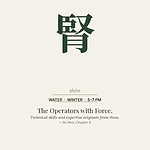
The Heart-Kidney axis represents the Water-Fire relationship in TCM: the Kidneys provide the grounding, cooling Water that should rise to nourish the Heart’s Fire; the Heart’s Fire descends to warm the Kidneys. When this communication fails — often through chronic stress, adrenal exhaustion, or underlying Yin deficiency — the Fire rises unopposed, disturbing the Shen at night. The Kidney’s failure to provide anchoring means the Heart floats upward.
Key signatures:
- Sleep pattern: Fragmented sleep, early morning awakening (often between 3–5 AM), light sleep with easy awakening
- Daily symptoms: Low back/knee soreness, tinnitus or hearing sensitivity, brain fog, memory lapses, cold extremities despite internal heat sensation
- Emotional tone: Anxiety with a “hollow” quality, fearfulness or apprehension (Kidney emotion), mental hyperarousal at night, racing thoughts that won’t quiet
- Void-heat signs: More marked five-hearts hot and night sweats than the Blood-deficiency pattern, evening flushing, feeling hot at night but cold to touch on extremities
- Tongue: Red or crimson body, minimal or no coating, possibly with cracks; pale coating on specific regions suggests combined Yang deficiency
- Pulse: Thin and rapid, especially in bilateral cun positions; left chi may be hollow or deficient (Kidney territory)
This pattern often develops from chronic stress cascades, mid-life hormonal transitions, or underlying constitutional weakness. It overlaps with burnout presentations and perimenopausal insomnia.
Pattern 3: Liver Qi stagnation converting to heat (肝鬱化火)
The Liver (肝) governs the smooth flow of qi throughout the body and is intimately tied to emotional regulation. Under chronic stress, unprocessed emotions, or life circumstances that feel constraining, Liver qi becomes stagnant. Over time, stagnation generates heat — like friction generating warmth. This heat climbs upward, disturbing the Shen and creating sleep onset difficulty. The classic pattern feature here is waking during the Liver hour (1–3 AM) or waking with a “racing mind” sensation.
Key signatures:
- Sleep pattern: Difficulty falling asleep due to mental hyperarousal, waking 1–3 AM and unable to return to sleep, dreams with emotional content (arguments, chase scenes, stress re-experiencing)
- Daily symptoms: Hypochondriac или chest fullness/discomfort, sighing (subconscious qi-releasing), headaches (especially temporal or temple tension), PMS with breast distention and irritability
- Emotional tone: Irritability, resentment that builds and doesn’t release, emotional constriction (feelings “blocked”), anxiety with physical tension, frustration about life circumstances
- Heat signs: Bitter or metallic taste in mouth (especially morning), red eyes or conjunctival injection, scant dark urine, constipation with dry stools
- Tongue: Red or crimson body with red tip, yellow coating (possibly greasy if phlegm-stagnation overlay); lateral tongue may show teeth marks or red points
- Pulse: Wiry (弦) and rapid (數) — the hallmark of qi-stagnation with heat; left guan position particularly pronounced (Liver territory)
This pattern is common among individuals in high-demand careers with low sense of control, those processing unresolved grief or resentment, or people living in perpetually stressful environments. It may overlap with generalized anxiety disorder or panic disorder presentations.

Acupuncture approach: point rationales, not promises
Acupuncture point selection is always pattern-specific. The following points are commonly used across these patterns but are combined and manipulated differently based on diagnostic differentiation.
HT-7 (Shenmen / 神門) — The Heart’s Source point. Shenmen calms the Shen, nourishes Heart-Blood, and addresses palpitations and anxiety. Used across all three patterns but with different manipulation techniques: tonifying for Blood deficiency, draining for heat disturbance, and balancing for disharmony.
PC-6 (Neiguan / 內關) — The Pericardium’s Luo-connecting point. Regulates the Heart, calms the Shen, and opens the chest. Especially useful when there’s chest fullness or cardiac discomfort accompanying insomnia. The bilateral pairing of HT-7 + PC-6 is a classic foundation across shen-disturbance patterns.
Yin Tang (Extra point) — The “Hall of Impression,” located between the eyebrows. Calms the Shen gently and is particularly helpful for reducing mental hyperarousal at bedtime. Often needled before other points as a sedating anchor for treatment.
SP-6 (Sanyinjiao / 三陰交) — The intersection of the Liver, Spleen, and Kidney channels. Nourishes Blood and Yin across all three Yin organs, making it useful for both Heart-Blood deficiency and Heart-Kidney disharmony. Also supports Spleen function (blood generation) and addresses menstrual-related sleep issues.
KD-3 (Taixi / 太溪) — The Kidney’s Source point. Tonifies Kidney Yin and provides anchoring for the Water-Fire relationship. Indicated for Heart-Kidney disharmony with marked Kidney deficiency signs (low back weakness, tinnitus, early awakening).
Note: Acupuncture for chronic insomnia typically requires multiple sessions over weeks. Research suggests that for primary insomnia, a course of 8–12 treatments shows clinically meaningful improvements in sleep quality and duration, though individual response varies. Acupuncture should be understood as a regulatory intervention that works synergistically with sleep hygiene and stress-management practices — not as a standalone “on-button” solution.

Herbal considerations: Suan Zao Ren Tang as an architectural example
When herbal support is appropriate, classical formulas offer pattern-specific architectures. Suan Zao Ren Tang (酸棗仁湯) — Sour Jujube Decoction — is the entry-point formula for Heart-Blood deficiency with void-heat insomnia. This is one of the five most frequently prescribed insomnia formulas in classical Chinese medicine according to teaching traditions.
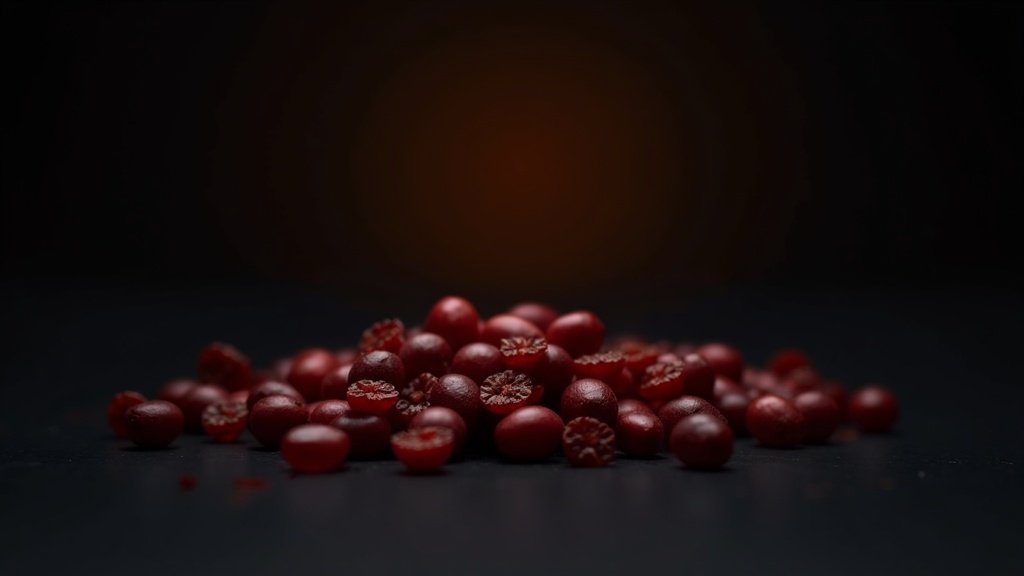
The formula’s 5-herb architecture was codified in the Jin Gui Yao Lue (金匱要略), a 2nd-century Han dynasty text. The core herb, Suan Zao Ren (Ziziphi Spinosae Semen), at 15–30 g dry-fried, nourishes Liver-Blood while calming the Shen — a dual action not shared by most sedating herbs. Supporting herbs include Fu Ling (Poria) for shen-calming and damp-drainage, Chuan Xiong (Ligusticum) at small dose to move blood gently (the “tonify-with-movement” hinge of the formula), Zhi Mu (Anemarrhena) to clear deficiency heat, and Gan Cao (Licorice) to harmonize.
Clinical research on Suan Zao Ren Tang shows promising results for primary insomnia, including improvements in sleep latency, total sleep time, and sleep quality scores. A 2019 systematic review published in Medicine (DOI: 10.1097/MD.0000000000016292) analyzed 18 randomized trials and concluded that Suan Zao Ren Tang significantly improved the Pittsburgh Sleep Quality Index (PSQI) compared to control groups, with few reported adverse events. The effect size was moderate to large, particularly for sleep-onset difficulty. However, the review noted that many individual trials had methodological limitations (small sample sizes, high dropout rates), and larger, higher-quality trials are needed to strengthen the evidence base. Suan Zao Ren Tang generally appears well-tolerated at standard doses (15–30 g Suan Zao Ren), though dry-fried preparation is superior for sleep indications compared to raw powder.
For Heart-Kidney disharmony, formulas like Zhen Wu Tang or Tian Wang Bu Xin Dan (later tradition) may be indicated depending on the specific balance of Yin-Yang deficiency. For Liver Qi stagnation with heat, Chai Hu Jia Long Gu Mu Li Tang or modified Xiao Yao San formulas are frequently used. All herbal interventions require pattern diagnosis by a qualified practitioner — the goal is support, not prescription. What works for one person’s insomnia pattern may be ineffective or counterproductive for another’s.
What to expect: pattern-mapping and integrative management
If you work with a TCM practitioner for chronic insomnia, expect a diagnostic process that goes deeper than “how many hours are you sleeping?” A proper TCM assessment will take about 75 minutes for the initial visit, covering sleep patterns, daily symptoms, emotional state, diet, bowel/bladder function, and other regulatory markers. This is pattern differentiation — matching your unique constellation of signs to a diagnostic category that guides treatment strategy.
For Heart-Blood deficiency patterns (SZRT territory), improvement in sleep onset often occurs within 2–4 weeks of consistent treatment, with fuller benefit accumulating over 6–12 weeks. For Heart-Kidney disharmony, the timeline may extend to 8–16 weeks given the constitutional depth of the pattern. For Liver Qi stagnation with heat, initial improvement in irritability and sleep quality may occur within 2–3 weeks, though ongoing stress-management is essential for durability.
Western management remains primary. If you have chronic insomnia, a biomedical evaluation is important to rule out sleep apnea, thyroid dysfunction, medication side effects, and primary mood or anxiety disorders. TCM can work alongside conventional care — CBT-I, sleep-hygiene optimization, stress-reduction practices, and (where indicated) medication — not as a replacement for it. The strongest outcomes come from an integrative approach that addresses both the body’s regulatory pattern and the lifestyle, environmental, and psychological contributors to chronic sleeplessness.
Next steps
Makari Wellness offers in-person consultations for pattern differentiation and treatment planning. If you’re curious about how TCM might approach your sleep challenges, schedule an appointment to explore your specific constellation of symptoms. Our clinics serve Oceanside and Rancho Bernardo, California.
Book online: https://makariwellness.com/book-appointment/
Phone: (888) 871-8889
Clinics:
- Oceanside: 2111 S. El Camino Real, Suite 301, Oceanside, CA 92054
- Rancho Bernardo (San Diego): 16486 Bernardo Center Drive, Suite 218, San Diego, CA 92128
For reference and further reading, the full citation list for this post is available on request or at our office. Sleep is a complex regulatory function, not a switch to flip. TCM offers a pattern-based mapping that can make the journey toward better sleep more navigable.