


What Is the Selective Functional Movement Assessment (SFMA)?
Movement is the foundation of everything you do — walking to the kitchen, reaching overhead, bending to pick something up from the floor. When pain interrupts those patterns, the body compensates, and those compensations quietly spread. The Selective Functional Movement Assessment, or SFMA, is a structured clinical tool designed to map exactly where movement has broken down, and more importantly, why.
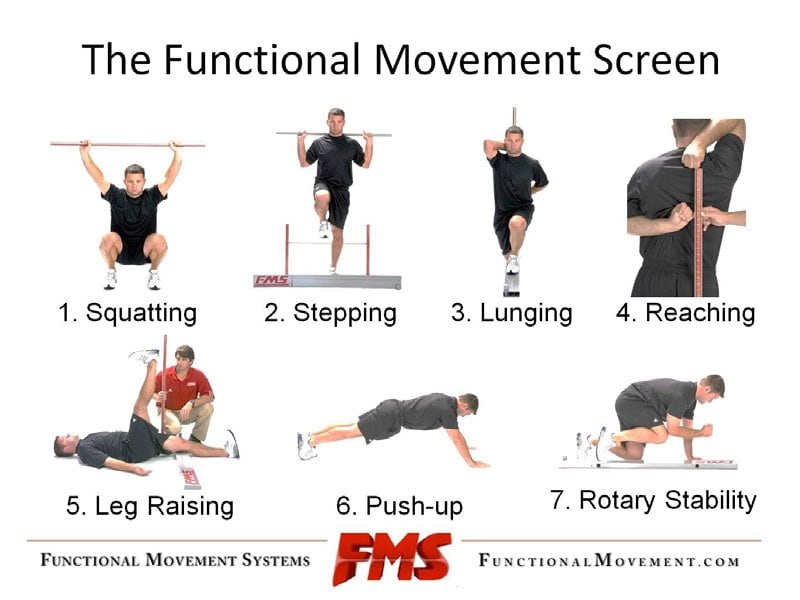
Developed as a top-tier movement assessment system, the SFMA evaluates seven fundamental movement patterns: cervical spine movement, upper extremity patterns, multi-segmental flexion and extension, rotation, single-leg stance, and an overhead squat. Each pattern is rated as functional or dysfunctional, and then as painful or non-painful. This creates a four-square grid that guides the clinician toward the true source of the problem — not just where it hurts, but where the movement system first started compensating.
The insight behind SFMA is that pain and dysfunction are rarely at the same address. A patient with low back pain may have a restriction in thoracic rotation or an ankle mobility deficit that has forced the lumbar spine to overwork. Treating the back alone without uncovering that upstream restriction leads to temporary relief at best, and chronic recurrence at worst.
The Fascial Map Beneath Your Movement
To understand why SFMA fits so naturally within an integrative Chinese medicine framework, it helps to understand how the body is actually organized. Modern manual therapy research — particularly the work of Thomas W. Myers in Anatomy Trains — has shown that muscles do not work as isolated units. They are wrapped in and connected by continuous sheets of connective tissue called fascia, and these fascial lines transmit force across the entire body.
Myers identified several cardinal fascial lines that run from foot to skull and arm to spine. The Superficial Back Line, for example, runs from the plantar fascia along the calf, through the hamstrings and sacrotuberous ligament, up the erectors of the spine, and over the head. A restriction anywhere along that line — a stiff ankle, tight hamstrings, a compressed sacrum — changes tension throughout the whole chain. The SFMA is particularly good at detecting these cross-regional effects because it tests whole-body movement patterns rather than isolated muscle strength.
What is remarkable from a Chinese medicine perspective is how closely these fascial lines parallel the classical tendinomuscular channels (jingjin). The Bladder tendinomuscular channel traces a path strikingly similar to Myers’ Superficial Back Line. The Gallbladder channel echoes the Lateral Line. The deepest line — running through the posterior tibialis, psoas, diaphragm, and deep neck flexors — corresponds to the Chong Mai, the extraordinary vessel that TCM considers the deepest structural axis of the body. This is not coincidence. Both systems arrived at the same anatomical truth through different methods of observation over very different timescales.
How Acupuncture and Chinese Medicine Address Movement Dysfunction
When SFMA identifies a dysfunctional movement pattern, the next question is whether the limitation is mobility-based or stability-based. A mobility problem means the tissue is restricted — it cannot move through its full range. A stability problem means the nervous system is not properly activating and sequencing the muscles needed to control movement. Both have distinct implications for treatment.
Acupuncture is well-suited to address both categories. For mobility restrictions, needling along the relevant tendinomuscular channel — combined with manual fascial release — can reduce tissue tension across an entire line, not just at a single point. A practitioner trained in this approach treats the fascial chain that SFMA has identified as restricted, rather than simply needling the site of pain.
For stability deficits, acupuncture works through the nervous system. Motor-point acupuncture — placing needles at the neuromuscular junction of specific muscles — can reset an inhibited or poorly firing muscle, helping the brain rediscover and reintegrate a muscle it has been routing around. This is particularly useful for the deep stabilizers of the spine and hip that are commonly found to be underactive when SFMA reveals poor single-leg stability or asymmetrical rotation.
In Chinese medicine terms, dysfunctional movement patterns often reflect stagnation or weakness along specific channel pathways. When the Kidney channel, which governs bone and the deep structural system, is depleted, the stabilizing muscles of the lumbar and hip may fail to recruit properly. When the Liver channel, which governs tendons and smooth range of motion, is in excess or stagnant, the fascial lines become tight and reactive. Treatment addresses both the physical restriction and the underlying energetic imbalance sustaining it.
What to Expect at Makari Wellness
At Makari Wellness, serving patients throughout Oceanside and San Diego, functional movement assessment is woven into the initial evaluation for most musculoskeletal concerns. Your first visit begins with a detailed health history and conversation about how your pain or limitation is affecting your daily life — the activities you have had to modify, the movements that have become unpredictable, the patterns you have learned to avoid.

From there, we walk through the key SFMA movement screens relevant to your presentation. You will be asked to move through patterns like forward bending, overhead reaching, and single-leg balance while your practitioner observes how your entire body coordinates — not just the region that hurts. This takes the guesswork out of treatment planning and allows us to track real progress over time with objective measures, not just how you feel on a given day.
Treatment sessions integrate several tools depending on what the assessment reveals:
- Acupuncture along myofascial lines to release fascial restrictions identified in the movement screen
- Motor-point needling to reactivate inhibited stabilizing muscles
- Cupping and Gua Sha for superficial fascial layers that are adhered or restricted
- Corrective movement coaching so that the gains from needling translate into better motor patterns during daily activity
- Chinese herbal support when underlying deficiencies in the channels — Kidney, Liver, Spleen — are contributing to the structural picture
Most patients notice a change in their movement quality within the first few sessions. Not just reduced pain, but a sense of easier, freer motion — the feeling that the body is working together rather than fighting itself. We re-screen key movements as you progress so we can both see and feel the improvement objectively.
Who Benefits from SFMA-Informed Care
SFMA-guided treatment is appropriate for a wide range of people. It is not only for athletes or people recovering from injury. Anyone who has noticed that their movement has become guarded, limited, or unpredictable — whether from a specific incident, years of desk work, post-surgical changes, or simply the accumulation of daily stress — can benefit from a clear, systematic look at how their movement system is functioning.
Common presentations that respond well to this approach include chronic low back pain, persistent neck and shoulder tightness, hip impingement or groin restriction, recurring ankle sprains, and post-injury rehabilitation where full movement has never quite returned. The assessment also serves patients who feel generally tight or stiff and want to understand the structural pattern behind that experience rather than simply managing symptoms indefinitely.
Begin Your Movement Assessment Today
Pain and limited movement do not have to be permanent features of your life. At Makari Wellness, we combine the precision of functional movement screening with the depth of Chinese medicine to address the whole pattern — not just the painful point. If you are ready to understand what is actually driving your restriction and build a clear plan to restore it, we invite you to Schedule Your Initial Visit at our Oceanside clinic and take the first step toward moving the way you were designed to move.