

Retinal Vein Occlusion and Chinese Medicine: Blood Stasis, Recovery, and the M48 Protocol
Sudden Loss, Slow Recovery
Retinal vein occlusion (RVO) arrives without warning: vision in one eye blurs, or a dark shadow and floaters appear overnight. Branch RVO (BRVO) affects a segment of the retinal venous network; central RVO (CRVO) blocks the main trunk. Both share the same mechanism — a venous obstruction causes blood to back up, leak, and deprive downstream retinal tissue of oxygen. The acute event is dramatic; the recovery arc is long. Chinese medicine reads the constitutional history that set the stage for the event, and offers a framework for supporting what comes after.
RVO is a vascular emergency. Immediate ophthalmologic evaluation and treatment — including anti-VEGF injections for macular edema — is the primary intervention. Classical Chinese medicine supports the recovery arc alongside, not instead of, this care.
How Chinese Medicine Reads Retinal Vein Occlusion
Blood stasis on Qi deficiency (Qì Xū Xuè Yū, 气虚血瘀) — the classic RVO picture. Insufficient Qi to drive Blood movement through the peripheral vasculature allows stagnation to accumulate in the retinal venous network. The Blood stasis is the acute event; the Qi deficiency is the root that made it possible. Both must be treated.
Liver Yang rising into Blood stasis (Gān Yáng Shàng Kàng Xuè Yū, 肝阳上亢血瘀) — the hypertensive picture. Unchecked Liver Yang elevates vascular tension throughout the system; in the retinal vasculature, this creates the arteriovenous compression and venous narrowing that sets the stage for occlusion. The high co-prevalence of hypertension and RVO reflects this classical connection.
Phlegm-Heat with Blood stasis (Tán Rè Xuè Yū, 痰热血瘀) — the metabolic-adjacent picture. In patients with elevated lipids or features of metabolic syndrome, Phlegm-Heat turbids the blood and impedes venous flow — the classical parallel to the high-viscosity, lipid-laden vascular environment that characterizes metabolic RVO.
The Dzung Lens: Blood Vessels and the Liver
In Dzung Van Nguyen’s ophthalmic mapping, the blood vessels of the eye correspond to the Heart (Fire element), and the iris corresponds to the Liver (Wood element). The Five Wheels framework reinforces this: the Blood Wheel (血輪, Xuè Lún) — governed by the Heart — encompasses the retinal vasculature. RVO is a Heart-governed vascular event with a Liver (Yang/Qi) constitutional driver. Treatment must speak to both the Heart’s governance of the vessels and the Liver root that drove the elevation or stasis accumulation.
Acupuncture for Retinal Vein Occlusion: M48, Scalp Vision Area, and the Electro Protocol
MA48 (Micro Acupuncture 48) — developed by Andy Rosenfarb, ND, LAc — is Makari’s specialty for vascular and degenerative eye disease. Within the MA48 classification, RVO falls squarely in the Clogging category (Qi and Blood stasis as primary pathology), with a potential Bleeding component if active retinal hemorrhage is present.
The MA48 system’s A points (distal, Yang) address the functional and excess layer; B points (proximal, Yin) address the constitutional root. For RVO, the protocol balances clearing the stasis with supporting the Qi deficiency and Liver constitution:
- HT-A (Heart — distal/sensory): the primary MA48 point for retinal vascular conditions; directly addresses the Heart’s governance of the Blood Wheel and the retinal vessel network.
- LR-A (Liver — distal/sensory): the most-used eye point in the MA48 system; the Liver governs the eyes in classical TCM; addresses the Liver Yang and Qi dimension of the constitutional RVO picture.
- SP-A / SP-B (Spleen): the Spleen governs Blood containment in the vessels and is the source of Qi generation; addressing the Spleen supports the Qi deficiency background that enabled stasis to develop.
Protocol: 34-gauge half-inch needles at ~45° onto periosteum, 30-minute retention. Response assessed within 1–4 treatments; approximately 15% of patients do not respond to MA48.
Scalp Acupuncture and Electro-Stimulation
The occipital Vision Area (枕上視覺區) in the Dr. Karl Tai lineage is applied in every Makari eye protocol. The Vision Three Needles (視三針) standard set at the occipital visual cortex representation is particularly relevant in the RVO recovery phase — supporting retinal blood flow and optic-nerve conduction in the weeks following the acute event.
Dense-Disperse wave electro-stimulation — the “Pulling Qi Method” (抽气法) — is applied to the Vision Area. GB-20 (*Fēngchí*) anchors the electro pair. For the acute-adjacent recovery phase, dual-wave (10 Hz + 4 Hz) may support healing and reduce local inflammation; for the longer recovery arc, 1–4 Hz (sustained tissue remodeling) is standard. Periorbital adjuncts — BL-2 (*Zǎnzhú*), SJ-23 (*Sīzhúkōng*) — may be added to extend the retinal reach of the protocol.
Chinese Herbal Medicine: Moving Stasis, Supporting the Root
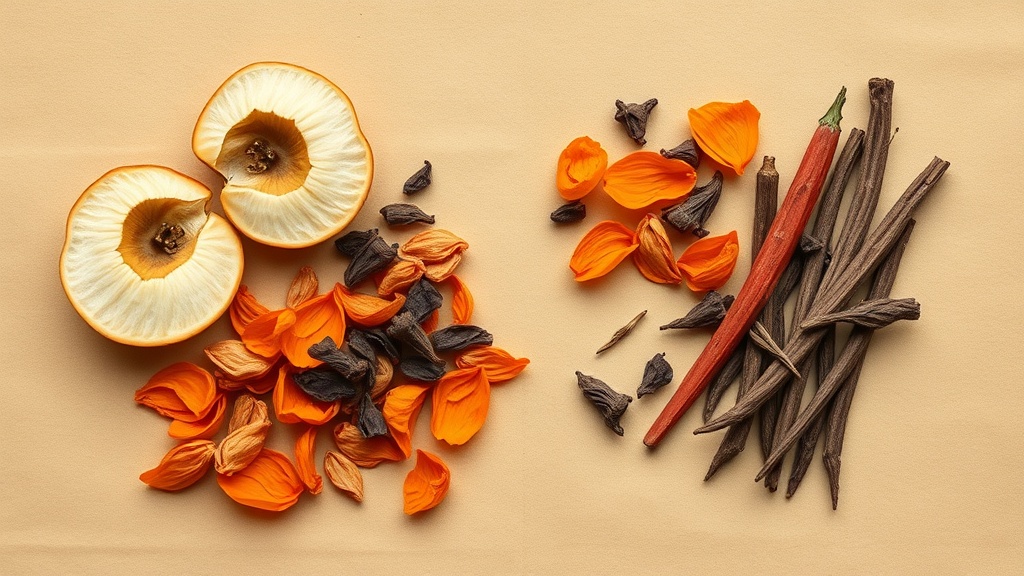
Tao Ren (Táo Rén, 桃仁) — peach kernel — is a major Blood-stasis mover with a classical focus on the vessel and collateral network; addresses fixed stasis settling into the peripheral circulation post-occlusion.
Hong Hua (Hóng Huā, 红花) — safflower — activates Blood and disperses stasis throughout the vascular network. Paired with Tao Ren, this combination is among the most time-tested in the classical pharmacopoeia for vascular obstruction.
Dan Shen (Dān Shēn, 丹参) — salvia miltiorrhiza — activates Blood, calms the Heart, and supports microvascular perfusion. Addresses both stasis and the Heat chronic stasis generates in the recovery environment.
Chi Shao (Chì Sháo, 赤芍) — red peony — cools and moves Blood simultaneously; addresses the Heat component of the Liver-Yang or Phlegm-Heat picture, preventing stasis from generating further inflammatory activity as it disperses. Specific formula selection — the classical base and modifications — follows a complete individual pattern assessment.
Functional Medicine Support
From a functional medicine perspective, RVO recovery benefits from targeted support in two categories: microvascular perfusion (capillary integrity and blood flow regulation in the recovering retinal territory — ginkgo biloba is a natural functional pairing for this layer, well-documented for retinal and cerebrovascular blood flow effects) and antioxidant support for the recovering retina (following RVO, ischemic and hemorrhagic damage generates significant oxidative stress in the surrounding retinal tissue; supporting RPE protective capacity is a priority in the post-acute window).
What the Research Shows
A 2026 systematic review in Frontiers in Medicine by Bautista-Hernández MA and colleagues examined acupuncture for inflammation-related ocular conditions. Their conclusion: current evidence is insufficient to make definitive claims — studies are heterogeneous and methodology varied. We share this honestly. The M48 protocol for RVO is a clinical conversation grounded in classical theory — a supporting layer in the recovery arc, not a standalone response to a vascular emergency. Frontiers in Medicine, 2026.
Curious? Let’s Talk.
If you or someone you love is navigating retinal vein occlusion and wondering what integrative acupuncture and herbal support might look like, we’d love to have that conversation.
The M48 protocol isn’t a promise — it’s a conversation. One grounded in classical theory, clinical experience, and an honest engagement with the evolving science.
Makari Wellness — Michael Woodworth, M.S., L.Ac. (established 2005)
Specializing in degenerative eye disease via the M48 protocol
Call us: (888) 871-8889
Book online: makariwellness.com/book-appointment
Oceanside: 2111 S. El Camino Real, Suite 301, Oceanside, CA 92054
San Diego: 16486 Bernardo Center Drive, Suite 218, San Diego, CA 92128
This content is educational and does not constitute medical advice. Acupuncture and herbal medicine are not replacements for conventional ophthalmologic care. Always continue your care with your ophthalmologist.