

Optic Neuritis and NAION: Chinese Medicine’s Blood-Nourishing Approach to the Optic Nerve
When the Optic Nerve Loses Its Signal
Visual field loss that appears overnight is one of the most unsettling experiences a patient can describe — and one of the most diagnostically weighted. Two distinct conditions can produce this picture: optic neuritis and non-arteritic anterior ischemic optic neuropathy (NAION). They share the outcome but differ fundamentally in mechanism, patient profile, and conventional management.
Optic neuritis is inflammatory — often the first sign of multiple sclerosis or neuromyelitis optica, mediated by demyelination of the optic nerve sheath. NAION, by contrast, is vascular: the posterior ciliary arteries fail to adequately perfuse the optic nerve head, producing a stroke-equivalent in the optic disc. Both leave clinicians and patients searching for answers that conventional ophthalmology often cannot fully provide. Classical Chinese medicine enters that conversation with a different set of tools — and a different question.
What Conventional Care Does — and Doesn’t Reach
For acute optic neuritis, high-dose intravenous corticosteroid therapy (typically methylprednisolone) remains the standard intervention — it accelerates visual recovery, though it does not alter long-term visual outcome. The connection to MS means that many patients enter a neurology workup simultaneously, with MRI and cerebrospinal fluid analysis. For NAION, there is no established acute pharmacological treatment with proven visual benefit; management is largely preventive — controlling blood pressure, sleep apnea, and vascular risk factors to reduce the risk of fellow-eye involvement.
What neither approach addresses directly is the constitutional terrain underlying optic nerve vulnerability: the Blood quality that feeds the nerve, the Kidney Jing that governs vessel integrity, and the Wind-Heat that may sustain the inflammatory environment after the acute phase. This is where classical Chinese medicine offers a meaningful complementary layer.
Safety first: In acute optic neuritis, immediate high-dose IV steroid therapy remains the standard of care for accelerating visual recovery. Classical Chinese medicine is a supportive adjunct — not a substitute. Always continue working with your neurologist and ophthalmologist throughout and after the acute phase.
Three TCM Patterns: Reading the Optic Nerve
Classical Chinese medicine evaluates visual loss through the lens of organ systems and pathological factors — not through optic nerve anatomy alone. Three patterns are clinically relevant across optic neuritis and NAION.
Blood Deficiency with Optic Nerve Malnourishment (Xuè Xū, 血虚)
Blood deficiency (Xuè Xū, 血虚) is the dominant pattern for most presentations of optic nerve visual loss. The optic nerve is arguably the most Blood-dependent structure in the entire eye — its axons require continuous nourishment from the Liver Blood to sustain transmission. When that supply is insufficient, the nerve dims. Patients present with gradual visual dulling, a pale or washed-out quality to their vision, fatigue, pallor, and the characteristic tongue-pulse picture of Blood deficiency: pale tongue, thin pulse. NAION patients often fit this picture clearly — they have been running on insufficient Blood for years before the optic nerve became the site of expression.
Wind-Heat Invading the Eye (Fēng Rè Mù Chì, 风热目赤) — Acute Optic Neuritis
In the acute inflammatory phase of optic neuritis, the classical pathology is Wind-Heat invading the eye (Fēng Rè Mù Chì, 风热目赤). Pain behind the eye with movement — one of optic neuritis’s clinical hallmarks — reflects Wind-Heat in the optic channel. The presentation is rapid onset, pain, and acute visual loss. This layer responds best to Wind-clearing and Heat-clearing herbs and, once the acute steroid treatment phase has concluded, to specific acupuncture point selection for the residual Wind-Heat picture.
Kidney-Liver Deficiency Root — NAION’s Constitutional Picture
For NAION — where vascular fragility, age, and systemic risk factors converge — the classical root is Kidney-Liver deficiency: Jing depletion leading to vessel fragility, and Liver Blood insufficiency that leaves the optic nerve head poorly perfused. Patients with hypertension, sleep apnea, and small disc anomalies fit this picture. The pulse is typically deep and thready; the tongue is pale. The constitutional work here is long-game: rebuilding Jing, nourishing Blood, and supporting the vascular substrate at its roots.
The Organ Lens: Why the Optic Nerve Is Liver-Kidney Territory
Dr. Dzung Tri Nguyen’s five-region mapping of the eye clarifies why these patterns cluster the way they do. The iris is the Liver (Wood element, the Wind-governing organ); the pupil is the Kidney (Water element, the Jing-governing organ). The optic nerve — as the channel through which the Liver’s visual function is expressed — falls squarely in the Liver domain. Its vascular supply is governed by the Kidney’s Jing and Yang.
The classical Five Wheels (Wǔ Lún, 五輪) framework amplifies this: the Wind Wheel (Fēng Lún, 風輪) — iris and cornea — belongs to the Liver; the Water Wheel (Shuǐ Lún, 水輪) — pupil — belongs to the Kidney. Visual clarity requires a Liver that receives adequate Blood and a Kidney that provides the deep Jing substrate for structural integrity. When both are compromised, the optic nerve is the first structure in the eye to show the deficit.
Acupuncture for Optic Neuritis and NAION: The M48 Protocol
At Makari Wellness, the primary modality for optic nerve conditions is the MA48 (Micro Acupuncture 48) protocol developed by Andy Rosenfarb, ND, LAc. MA48 is a 48-point distal microsystem — 24 hand points and 24 foot points — based on the ECIWO holographic principle (Embryo Contains Information of the Whole Organism, developed by Prof. Yingqing Zhang). Needles are 34-gauge half-inch, inserted at approximately 45 degrees onto the periosteum, with 30-minute retention per session.
In the MA48 classification, optic neuritis and NAION span the “Drying” and “Clogging” categories — reflecting the Blood deficiency root (Drying) and the vascular insufficiency or stasis component (Clogging) that drives the ischemic picture in NAION. The point selection reflects this dual nature.
For optic neuritis and NAION, the MA48 protocol centers on these points:
- LR-A (Liver distal, Yang point): The single most important point for optic nerve conditions in the MA48 system. “Liver governs the eyes” — this functional and sensory point addresses the Liver’s visual expression directly. Used in virtually every session for this condition, it is the entry point for the Liver-channel needle work.
- LR-B (Liver proximal, Yin point): The constitutional Liver Blood deficiency root. Where LR-A addresses the functional sensory dimension, LR-B addresses the structural Yin-Blood depletion that underlies chronic optic nerve malnourishment. Used when the Blood-deficiency picture is prominent and longstanding.
- KI-B (Kidney proximal, Yin point): The Jing deficiency constitutional anchor — especially critical in NAION, where vascular fragility reflects Kidney root depletion. KI-B builds the structural substrate from which vessel integrity is expressed; it is the deepest Yin reach of the MA48 system into the Kidney axis.
- HT-A (Heart distal, Yang point): Heart governs blood vessels — including the posterior ciliary arteries that supply the optic nerve head in NAION. HT-A addresses retinal and optic-disc vascular perfusion from the Five Phase axis, supporting the circulation dimension that the Blood-nourishing work builds over time.
Periorbital adjuncts in the recovery and maintenance phases include BL-2 (Zanzhu, 攢竹) at the medial eyebrow and BL-1 (Jingming, 睛明), which provides direct reach to the optic nerve channel via the inner canthus. These are retained simultaneously with the distal MA48 points for the standard 30-minute session. Important clinical note: in the acute optic neuritis phase — during or immediately after steroid treatment — periorbital needling is held, and the session focuses entirely on MA48 distal points to avoid stimulating an actively inflamed nerve channel.
Electro-Acupuncture Parameters
In the subacute and recovery phases, electro-acupuncture may be added to the protocol. For residual anti-inflammatory support, a 10 Hz + 4 Hz dual-wave is often indicated. For the chronic Blood-nourishing and nerve-restoration phase, 1–4 Hz sustained low-frequency stimulation supports tissue remodeling and parasympathetic regulation. These parameters follow established electro-acupuncture frequency-effect research for nerve tissue recovery.
Scalp Acupuncture: Vision Area Stimulation
In the subacute and recovery phases, the Occipital Vision Area (枕上視覺區) — located 1 cm lateral to the external occipital protuberance, 4 cm superior — is added as an adjunct modality. Dr. Karl Tai’s Vision Three Needles (Shì Sān Zhēn, 視三針) at this location stimulate the cortical visual pathway via the cortical representation of the visual cortex. Mandatory electro-stimulation is applied using Dense-Disperse wave — the Pulling Qi Method (Chōu Qì Fǎ, 抽気法) — producing enhanced retinal blood flow and optic-nerve conduction via galvanic current.
Patients in the recovery phase of optic neuritis often report an “immediate brightening” sensation during Vision Area electro-stimulation. Whether this reflects enhanced cortical processing, improved optic-nerve conduction, or increased retinal blood flow remains under investigation. Clinically, this adjunct — combined with MA48 distal point selection — is associated with acceleration of the visual recovery trajectory in patients who have passed the acute phase. It is not a substitute for conventional neuro-ophthalmic care; it is an adjunct layer in the recovery window.
What the Research Shows
A 2026 systematic review in Frontiers in Medicine by Bautista-Hernández MA and colleagues examined existing clinical studies on acupuncture for inflammation-related ocular conditions. Their honest conclusion: current evidence is insufficient to make definitive claims — studies are heterogeneous, sample sizes small, and methodology varied. This is not a verdict against acupuncture. It is a call for better, more standardized integrative research. Frontiers in Medicine, 2026.
In our clinical experience, patients with optic neuritis and NAION who engage consistently with the MA48 protocol in the 6–12 weeks following the acute episode often report improvements in visual field clarity, contrast sensitivity, and the “dim quality” that can persist long after acute inflammation has resolved. These are clinical observations, not controlled-trial data, and we present them as such.
Chinese Herbs: The Blood-Nourishing Formulary
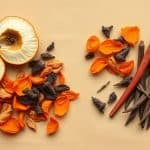
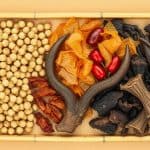
Herbal support in optic neuritis and NAION centers on the Blood-nourishing, Wind-clearing, and Kidney-supporting action categories. Key herbs used in this context include:
- Dang Gui (Dāng Guī, 当归) — “Queen of Blood.” The most classical herb for nourishing and gently moving Blood simultaneously. Dang Gui feeds the Liver Blood, supports the optic nerve’s Blood supply, and prevents the stagnation that pure tonification can produce over time. Essential in any formula targeting Blood-deficiency visual loss.
- Bai Shao (Bái Sháo, 白芍) — white peony root. Nourishes Liver Blood and Liver Yin together. Classical texts describe it specifically for “the eye that is not bright” — the dim, malnourished quality of Blood-deficient vision. Works synergistically with Dang Gui in the Liver Blood axis.
- Ju Hua (Jú Huā, 菊花) — chrysanthemum flower. The classical Wind-clearing, Liver-soothing, eye-brightening herb. In the Wind-Heat phase of acute optic neuritis, Ju Hua addresses ascending Wind-Heat in the Liver channel that reaches the optic nerve. Cooling, light, and dispersing — its role shifts from Wind-clearing in the acute phase to brightening and protective in the recovery phase.
- Gou Qi Zi (Gǒu Qǐ Zǐ, 枸杞子) — wolfberry. The preeminent Liver-Kidney Yin-Blood tonic and classical eye herb. Builds the Yin-Blood substrate from which optic nerve nourishment draws. Used long-term in the constitutional phase for both optic neuritis recovery and NAION constitutional management.
- Sang Ye (Sāng Yè, 桑叶) — mulberry leaf. Clears Wind-Heat from the upper jiao and specifically benefits the eyes. Pairs with Ju Hua in the acute Wind-Heat layer; lighter and more dispersing, ideal for the upper-body Wind-Heat clearing needed in acute optic neuritis.
Formula design is always individualized to the pattern. The ratio of Blood-nourishing to Wind-clearing herbs shifts with the clinical phase — heavier on Wind-clearing in the acute inflammatory window, pivoting to pure Blood and Jing building through the recovery and constitutional phases.
Functional Medicine: Neuro-Optic Mitochondrial Support
The optic nerve is a metabolically demanding structure — its axons require continuous mitochondrial energy to sustain signal transmission. The functional medicine layer at Makari Wellness addresses this directly, alongside the classical herbal work:
- Acetyl-L-Carnitine (ALCAR): Supports mitochondrial energy production in neuronal tissue; clinical study data exist specifically for optic nerve support in conditions including Leber’s hereditary optic neuropathy, where mitochondrial dysfunction is primary. Relevant for both optic neuritis and NAION on the neuro-optic mitochondrial axis.
- Phosphatidylserine: A structural phospholipid critical for neuronal membrane integrity; supports axonal membrane function in demyelinated contexts — directly relevant in MS-associated optic neuritis where the myelin sheath is the primary site of injury.
- Omega-3 fatty acids (EPA/DHA): Anti-inflammatory and neuroprotective; the EPA fraction addresses the ongoing inflammatory component in MS-associated optic neuritis, while DHA provides structural support for retinal and axonal membranes. The DHA content of the optic nerve axonal membrane makes this a targeted intervention.
- Vitamin B12 (methylcobalamin): For MS-associated optic neuritis specifically, B12 as methylcobalamin supports myelin synthesis and axonal conduction. Deficiency is common in MS populations and directly worsens optic nerve signal transmission when present.
These supports are not substitutes for neurologic care — they are terrain-level supports for the optic nerve’s metabolic environment during recovery. As with herbs, selection is pattern-matched: not every patient needs all four, and the intake determines which functional sphere is most compromised in the individual picture.
Curious? Let’s Talk.
If you or someone you love is navigating optic neuritis or NAION and wondering what integrative acupuncture and herbal support might look like, we’d love to have that conversation.
The M48 protocol isn’t a promise — it’s a conversation. One grounded in classical theory, clinical experience, and an honest engagement with the evolving science.
Makari Wellness — Michael Woodworth, M.S., L.Ac. (established 2005)
Specializing in degenerative eye disease via the M48 protocol
Call us: (888) 871-8889
Book online: makariwellness.com/book-appointment
Oceanside: 2111 S. El Camino Real, Suite 301, Oceanside, CA 92054
San Diego: 16486 Bernardo Center Drive, Suite 218, San Diego, CA 92128
This content is educational and does not constitute medical advice. Acupuncture and herbal medicine are not replacements for conventional ophthalmologic care. Always continue your care with your ophthalmologist.