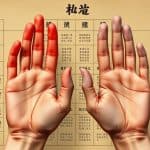


Post-meal fatigue — when Spleen-Qi is the bottleneck
Post-meal Fatigue: When Spleen-Qi Is the Body’s Fuel Refinery
You just finished lunch and already feel like hitting the afternoon snooze button. That heavy, foggy fatigue that drops over you 30–60 minutes after eating? This isn’t normal tiredness — that’s your body’s Spleen-Qi system signaling that your internal fuel refinery is running low. When the Spleen’s “cooking fire” lacks the fuel to transform what you eat into usable Qi and Blood, every meal becomes a tax rather than a refresh. In this post, we walk through the three patterns of post-meal fatigue, how Spleen-Qi deficiency differs from other energy drains, and what TCM offers beyond a stronger coffee.
The Western Picture: Postprandial Fatigue and Energy Regulation
In Western medicine, post-meal drowsiness is colloquially “the food coma” — a normal response to digestion and blood-glucose shifts after eating. The standard model centers on insulin dynamics: carbohydrates trigger insulin release, cells absorb glucose, and remaining amino acids enter the brain and can induce drowsiness. For some people, this swing can be more pronounced, especially after high-carb meals.
When fatigue is chronic and disproportionate to meal size, clinicians may investigate postprandial hypoglycemia or glucose intolerance. Standard care typically targets dietary composition (larger protein/fiber, lower refined carbs), meal timing, and exercise timing — all legitimate levers. But for patients who’ve adjusted their diet and still find themselves crashing after a light lunch, something beyond glucose regulation may be at play. This is where TCM’s organ-system lens becomes useful: it describes not just what fuels the system (the meal), but the body’s capacity to process it.
The TCM Reframe: The Spleen as Your Internal Refinery
In TCM, the Spleen (脾 — Pinyin: Pí) is not the anatomic organ but an organ network whose first job is transforming food and drink into Qi and Blood. Think of it as a refinery: raw fuel arrives in the form of food and water; the Spleen-Qi is the fire that burns it into usable energy that flows through all the channels. The process depends on warmth and motion. When Spleen-Qi is insufficient, that refining fire is low. The fuel arrives, but not much of it gets converted. The result is postprandial fatigue — a crash right when your cells should be getting richer.
The Spleen’s work doesn’t end at transformation. A secondary function is holding Blood in the vessels and lifting and holding the organs in place. When Spleen-Qi drops enough, you also start noticing softness in the muscles, bloating after meals, and a sense of heaviness that won’t shake. Sound familiar? If you consistently feel more tired after eating than before, if your face looks sallow rather than flushed with health, and if your stool tends to be soft or irregular, this pattern is the Spleen’s specialty.
Pattern Walk-Through: Three Ways the Refinery Can Stall
“The Spleen-Qi deficiency pattern isn’t about a cold stomach — it’s about an engine without fuel. The fuel arrives, but the fire to transform it is too low to sustain output.”
Pattern 1 — Simple Spleen-Qi Deficiency
When Spleen-Qi is deficient without major complications, you get the “baseline” energy-fatigue pattern. Core signs include chronic fatigue that increases after meals, poor appetite with mild digestive sluggishness, a pale or sallow complexion, soft stools or loose bowel movements, a weak voice and disinclination to speak, and a pale tongue with thin white coating and possibly teeth marks. The pulse is typically weak, especially at the right guan (spleen) position.
In this pattern, the Spleen’s transforming function is simply weak — not severely obstructed by dampness, not collapsing from qi sinking, and not being driven off course by emotional stress. The Spleen-Qi Tonics that anchor this area center around the Si Jun Zi Tang (四君子汤, Four Gentlemen Decoction). SJZT is the parent formula of the qi-tonic family: Ren Shen (Ginseng) to tonify source qi, Bai Zhu (Atractylodes macrocephala) to strengthen the Spleen and dry damp, Fu Ling (Poria) to drain residual dampness, and Zhi Gan Cao (Prepared Licorice) to harmonize and support the middle. In classical teaching, SJZT is the “clean spleen-xu” formula for when Qi deficiency is present without the complications of damp accumulation, sinking Qi, or blood deficiency.
Pattern 2 — Spleen-Qi with Dampness: Heavy and Foggy
When Spleen-Qi deficiency meets damp accumulation, the fatigue becomes “heavy fog.” Damp is thick, sticky, and sluggish, and when lodged around the Spleen, the system can’t lift. You’ll experience pronounced heaviness in the limbs and head, a thick greasy tongue coat, a pulse that feels slippery or sluggish, and the post-meal crash is more intense because the Spleen is now processing both the meal and the damp burden. Many patients report brain fog and a sense that movement takes more effort than it should. Bloating after eating is common, as is a sticky taste in the mouth.
This is where the pattern extends beyond SJZT alone. When damp is prominent, the Spleen may require formulas that move damp more actively. For damp-obstruction centered on the middle, Ping Wei San (平胃散, Powder to Regulate the Stomach) is the classic damp-draining approach for heavy, sluggish digestion. When damp overlaps more broadly with Qi deficiency, Shen Ling Bai Zhu San (参苓白术散) adds damp-leaching herbs on top of the SJZT base. Clinically, the differentiation between thin damp (amenable to SJZT-family modifications) versus dense phlegm-damp (more likely requiring ECT/LJZT territory) is key.
Pattern 3 — Spleen-Qi with Liver Overacting: Irritability Under Stress
The Liver (肝 — Gān) should smooth the flow of Qi. When the Liver resists — from stress, long hours, or suppressed emotion — it can overact on the Spleen, making the Spleen even weaker. This pattern presents as fatigue under stress, with irritability before meals or after emotional friction, bloating that tracks with emotional load, and loose stool under pressure. The Spleen is the general; the Liver is the General’s mood. When mood shifts, the Spleen’s refining fire dips. The pulse may be wiry (Liver) with a weak right guan (Spleen).
In this combined pattern, treatment centers on smoothing the Liver while supporting the Spleen. Chai Hu Shu Gan San (柴胡疏肝散) is the Liver-smoothing anchor; when used with Spleen-Qi tonics, you get a dual action: the Liver stops driving off the Spleen while the Spleen rebuilds its strength. The formula architecture is often a combination: SJZT for the Spleen component, plus the Chai Hu layer for the Liver component. This is a common clinical configuration for burnout presentations — a Spleen that is tired and a Liver that is tense.
Acupuncture Approach: Point Rationale for Post-Meal Crash
Acupuncture for Spleen-Qi deficiency is pattern-targeted. The aim is to support the Spleen’s transforming function and clear the obstacles that block energy flow. The following points are commonly selected depending on pattern:
- ST-36 (Zu San Li, “Leg Three Li”) — The Lower He-Sea point of the Stomach and a major Spleen-Stomach tonic. Used to tonify Spleen-Qi and support postprandial transformation. The classic point for general energy and digestible output post-meal.
- SP-6 (San Yin Jiao, “Spleen Three Ying”) — Meeting point of the Spleen, Liver, and Kidney channels. Supports Spleen-Qi while also regulating the blood. Useful in mixed patterns when Spleen-Qi overlaps with stress or blood deficiency.
- SP-3 (Tai Bai, “Great White”) — The Source point of the Spleen channel. Tonifies Spleen-Qi and clarifies damp. Often selected for soft stools and post-meal fatigue with mild damp features.
- CV-12 (Zhong Wan, “Middle Stomach”) – Front Mu of the Stomach. Supports postprandial digestion directly. For patients with significant bloating after eating, this midline point anchors the Spleen-Stomach coordination.
- ST-25 (Tian Shu, “Celestial Pivot”) — Front Mu of the Large Intestine. Helps move lower digestive transit. Select when loose stools and bloating are part of the postprandial picture.
Acupuncture for Spleen-Qi deficiency is often delivered in a course — the system rebuilds gradually, and treatment frequency tracks the goal. When Liver overacting is present, points like LV-3 (Tai Chong) may be added to smooth the flow. When damp is heavy, the selection expands to include additional damp-clearing points. Every session is tailored: the tongue, the pulse, and the symptom mapping guide the exact architecture.
Herbal Considerations: Spleen Tonics in Clinical Context
Classical formulas for Spleen-Qi deficiency are modular and pattern-specific. Below are the anchors that TCM practitioners draw from. Note that “prescription” implies a licensed clinical encounter in California; the following is educational framing, not a recommendation to self-prescribe.
Si Jun Zi Tang (四君子汤, Four Gentlemen Decoction)
Ren Shen (Ginseng), Bai Zhu (Atractylodes macrocephala), Fu Ling (Poria), Zhi Gan Cao (Prepared Licorice). The baseline qi-tonic for clean Spleen-Qi deficiency. In clinical practice, SJZT is more often used as a component combined with other formulas than as a stand-alone prescription. The classical teaching frames it as the “clean spleen-xu” option: when Qi deficiency is present without damp accumulation, sinking Qi, or blood deficiency.
Ping Wei San (平胃散, Regulating Powder)
Ban Xia, Chen Pi, Cang Zhu, Zhi Gan Cao. For damp-obstruction with heavy, sluggish digestion. The damp-draining approach when post-meal fatigue is dominated by thick tongue coat, nausea, and a sense of blockage.
Shen Ling Bai Zhu San (参苓白术散)
SJZT base with Shan Yao, Bian Dou, Lian Zi, Yi Yi Ren, Sha Ren, and Jie Geng. A stronger damp-leaching variant for thin damp, often selected for soft stools and bloating combined with moderate fatigue.
Chai Hu Shu Gan San (柴胡疏肝散)
When stress and irritability drive post-meal crash. Liver-smoothing action to restore Spleen-Qi’s stable refining fire. Clinically, often combined with SJZT-based Spleen support for mixed patterns.
Herb disclaimer: Herbs and formulas should be selected and prescribed by a licensed acupuncturist or TCM practitioner following an in-clinic evaluation. Herbs can interact with medications and conditions, and some herbs have contraindications. This post is for educational purposes only and does not constitute individualized medical advice.
What to Expect: Pattern Mapping and Western Management Primary
Acupuncture and herbal support for Spleen-Qi deficiency is most effective when the treatment is mapped to your pattern. Some patients experience mild energizing within one session; many see cumulative benefits over two to six treatments as the Spleen’s refining capacity rebuilds. The timing of fatigue often shifts first (you can get through lunch without the crash), then bowel habits regularize, then the daytime sense of heaviness eases.
Western management remains the primary framework: post-prandial glucose dynamics, meal composition, and digestive tolerance. TCM pattern work complements these levers by addressing capacity — the difference between “what to eat” and “how fully your body can use what you eat.” For patients with chronic fatigue that persists despite dietary adjustments, integrating TCM pattern mapping often reveals the bottleneck that diet alone can’t reach.
If you have questions about whether your fatigue fits the Spleen-Qi pattern versus other causes, that is what consultation is for. Not every post-meal fatigue is Spleen-Qi; some patterns require different support. A licensed practitioner will take a detailed history, examine tongue and pulse, and map symptoms to a pattern before recommending treatment.
In-At-Makari Wellness
Makari Wellness has been helping patients navigate complex health challenges since 2005. Whether you’re searching for answers to chronic fatigue, neurological or orthopedic conditions, or seeking to understand your health through the TCM lens, we offer detailed consultations to map your pattern and build a treatment plan.
To book an in-clinic consultation, you can visit makariwellness.com/book-appointment/ or call us at (888) 871-8889.
This post is for general educational purposes and is not a substitute for individualized medical advice or treatment. If you’re experiencing persistent or severe symptoms, please consult with a licensed healthcare provider.