

Retinitis Pigmentosa and Chinese Medicine: The Kidney Jing Framework
A Diagnosis That Changes Everything
Retinitis pigmentosa (RP) is one of the most challenging diagnoses in ophthalmology — not because it is acutely life-threatening, but because it arrives with a long sentence attached: progressive, hereditary, and without a disease-modifying pharmacological therapy available for the vast majority of genotypes. Rod photoreceptors in the peripheral retina begin dying first, narrowing the visual field inward like a closing iris. As the disease progresses, cone photoreceptors in the macula may eventually become involved, threatening central vision as well. The pace varies considerably by genotype and individual constitution — some patients remain functionally sighted well into their sixth and seventh decades; others experience significant peripheral loss in their twenties and thirties.
Gene therapy trials are advancing. Voretigene neparvovec (Luxturna) is now available for certain RPE65 mutations — the first structural intervention in RP to demonstrate meaningful visual recovery. For the majority of RP genotypes, however, current medicine offers monitoring, low-vision rehabilitation, and watchful waiting. It is in the space between diagnosis and the horizon of gene therapy that classical Chinese medicine has something meaningful — and honestly positioned — to offer.
What Conventional Care Provides (and Where It Ends)
Ophthalmologic monitoring of RP includes visual field testing, electroretinography (ERG), and OCT imaging of the retinal nerve fiber layer and outer nuclear layer. The ERG is the most sensitive indicator of rod photoreceptor function and its progressive decline. Supplemental vitamin A palmitate was studied in large longitudinal trials with mixed results and carries hepatotoxicity risk at sustained high doses. Dark-adaptation aids and night-vision devices help with practical function in dim environments. For most patients, the ophthalmology visit is a progress check on a trajectory that cannot currently be altered by pharmacological means beyond supportive supplementation.
The open question — the one that brings patients to our practice — is whether constitutional support can affect the rate of Jing depletion, optimize the mitochondrial and antioxidant environment in which remaining photoreceptors operate, and address the secondary patterns (Liver Blood deficiency, Kidney Yang deficiency) that accelerate the condition’s progression. In our clinical experience, the answer is that it can — in some patients, meaningfully. But this requires honest framing from the outset, and we provide it.
The Classical Picture: RP as a Jing-Depletion Condition
Kidney Jing Deficiency — The Dominant Constitutional Root (Shèn Jīng Xū, 腎精虛)
Kidney Jing deficiency (Shèn Jīng Xū, 腎精虛) is the classical root of retinitis pigmentosa. Jing (精) is constitutional essence — the inherited deep reserve that governs structural development, reproductive capacity, and the body’s regenerative potential. Unlike Qi, which can be replenished daily through food and rest, Jing is finite and non-renewable in large quantities. Every chronic depletion — excessive work, insufficient sleep, constitutional stress — draws down Jing. Every herb and practice that conserves it extends the reserve.
When Kidney Jing declines below the threshold required to sustain a metabolically demanding tissue — and no tissue in the body is more metabolically demanding than the photoreceptor outer segment — structural deterioration begins. RP, in the classical frame, is precisely this: a hereditary insufficiency of Jing expression at the retinal level. The rod photoreceptors of the peripheral retina fail first because they represent the most Jing-dependent reach of the visual system — the periphery is the furthest extension of the constitutional resource, and when that resource is insufficient, the periphery fails first. The retina runs dry from the outside in.
Liver Blood Deficiency — Secondary and Accelerating (Gān Xuè Xū, 肝血虚)
Liver Blood deficiency (Gān Xuè Xū, 肝血虚) is the secondary pattern in RP, and it accelerates the Jing-depletion picture considerably. The Liver Blood nourishes the optic nerve, retinal vasculature, and the visual channels generally. When Liver Blood is insufficient, the photoreceptors already operating on insufficient Jing receive less vascular nourishment in addition — a compounding deficit. Jing depletion weakens Liver Blood production; Liver Blood insufficiency accelerates the rate at which remaining photoreceptors are under-resourced. Both must be addressed in any serious formula design for this condition.
Yang Deficiency in Advanced Stages (Shèn Yáng Xū, 腎陽虛)
In later-stage RP — particularly in patients who have been depleting Jing over decades — Kidney Yang deficiency (Shèn Yáng Xū, 腎陽虛) frequently emerges alongside the Yin-Jing picture: cold extremities, nocturia, early-morning fatigue, pallor, and an overall loss of the warming and activating function that Yang provides. This stage represents a transformation from pure Yin-Jing depletion into a mixed Yin-Yang deficiency, and the formula must shift to address Yang alongside Jing and Blood.
The Organ Lens: Pupil, Periphery, and the Kidney
Dr. Dzung Tri Nguyen’s five-region model maps the pupil to the Kidney (Water element). The rod-dominant peripheral retina — the retinal tissue most vulnerable in RP — represents the Kidney’s expression in the visual field. As Kidney Jing depletes, the periphery, which sits furthest from the constitutional center and is most Jing-dependent, fails first. This is the clinical map that organizes every treatment decision.
The classical Water Wheel (Shuǐ Lún, 水輪) of the Five Wheels (Wǔ Lún, 五輪) framework confirms this: the Water Wheel governs the pupil and deep visual function — the Kidney’s domain. RP is the archetypal Water Wheel failure: deep, constitutional, slow, and rooted in the hereditary Jing substrate. No other condition in the classical ophthalmology canon presents this picture as purely as RP does.
Acupuncture for Retinitis Pigmentosa: The M48 Protocol
At Makari Wellness, RP treatment centers on the MA48 (Micro Acupuncture 48) protocol developed by Andy Rosenfarb, ND, LAc — a 48-point distal microsystem of 24 hand points and 24 foot points, based on Prof. Yingqing Zhang’s ECIWO holographic principle (Embryo Contains Information of the Whole Organism). In the MA48 classification, RP falls in the “Drying” category — specifically in the most serious structural sub-category of that group — reflecting Kidney Jing and Liver-Kidney Yin-Blood depletion driving progressive photoreceptor atrophy. This is the category of conditions where the MA48 protocol is working at the deepest constitutional register.
The MA48 point protocol for RP reflects the Kidney-primary, Liver-secondary constitutional picture:
- KI-B (Kidney proximal, Yin point): The most important point in the RP protocol. This Kidney structural and constitutional point addresses the root Jing depletion at the level of essence and structure. It is used in every session. In the MA48 A/B polarity system, B points address structural, constitutional, and chronic deficiency patterns; KI-B reaches the deepest layer of Kidney Jing insufficiency accessible within the microsystem.
- KI-A (Kidney distal, Yang point): The functional and sensory dimension of Kidney Qi. While KI-B addresses the structural Jing root, KI-A is added to support the functional expression of remaining Kidney-mediated visual function — the day-to-day sensory output that depends on the Jing foundation KI-B is building.
- LR-B (Liver proximal, Yin point): The Liver structural and Blood-nourishing point. Addresses the Liver Blood deficiency that compounds Jing depletion and fails the optic nerve and retinal vasculature. Used in most sessions to address the accelerating secondary pattern.
- BL-A / BL-B (Bladder — Kidney’s paired organ): The Bladder-Kidney pairing governs Yang-Qi regulation at the constitutional level. BL-A and BL-B are added when the Yang-deficiency picture of advanced RP emerges — supporting the warming and activating function that progressive Jing depletion progressively erodes.
- BL-1 (Jingming, 睛明): The local periorbital adjunct providing direct reach to the retinal channel — used to support residual photoreceptor function in conjunction with the distal MA48 work. Retained simultaneously with the distal points for the 30-minute session.
RP is a lifetime treatment proposition for most patients. The MA48 protocol is designed for exactly this sustained engagement. While change is often expected within 1–4 treatments, sustained commitment is what distinguishes patients who see meaningful functional stabilization from those who do not. We have this conversation directly at the initial consultation, and we return to it at every milestone. There are no shortcuts in constitutional medicine for hereditary disease.
Scalp Acupuncture and Electro-Stimulation
The Occipital Vision Area (枕上視覺區) — 1 cm lateral to the external occipital protuberance, 4 cm superior — is added as a regular component of the RP protocol. The Visual Three Needles (Shì Sān Zhēn, 視三針) of the Dr. Karl Tai lineage stimulate the cortical visual pathway and support optic-nerve conduction via galvanic current. Mandatory Dense-Disperse wave electro-stimulation — the Pulling Qi Method (Chōu Qì Fǎ, 抽気法) — drives the mechanism: enhanced retinal blood flow and cortical visual pathway stimulation.
For RP specifically, electro-acupuncture at 1–4 Hz — the chronic degeneration frequency range — is calibrated for sustained tissue support and parasympathetic regulation, not acute anti-inflammatory effect. The goal is long-term neuro-optic support for the residual retinal tissue, and optimization of the micro-vascular and neuronal environment in which remaining rod and cone photoreceptors operate. We are explicit with every RP patient about the distinction between supporting residual function and reversing degeneration that has already occurred. Both deserve honest language.
What the Research Shows
A 2026 systematic review in Frontiers in Medicine by Bautista-Hernández MA and colleagues assessed existing evidence for acupuncture in retinal degenerative conditions. The conclusion: heterogeneous studies, small sample sizes, insufficient evidence for definitive claims. We share this assessment and present it directly to every RP patient at consultation. The evidence base for MA48 in RP is clinical and observational at this stage — not randomized controlled-trial data. That is the honest position, and it is the one we take. Frontiers in Medicine, 2026.
Chinese Herbs: Building the Jing Foundation
The herbal formulary for RP works at the deepest constitutional level — Jing building, Liver Blood nourishing, and Yang warming in later stages. This is not a symptomatic formulary; it is a long-horizon constitutional prescription that tracks the pattern through its evolution over years. Key herbs in this context include:
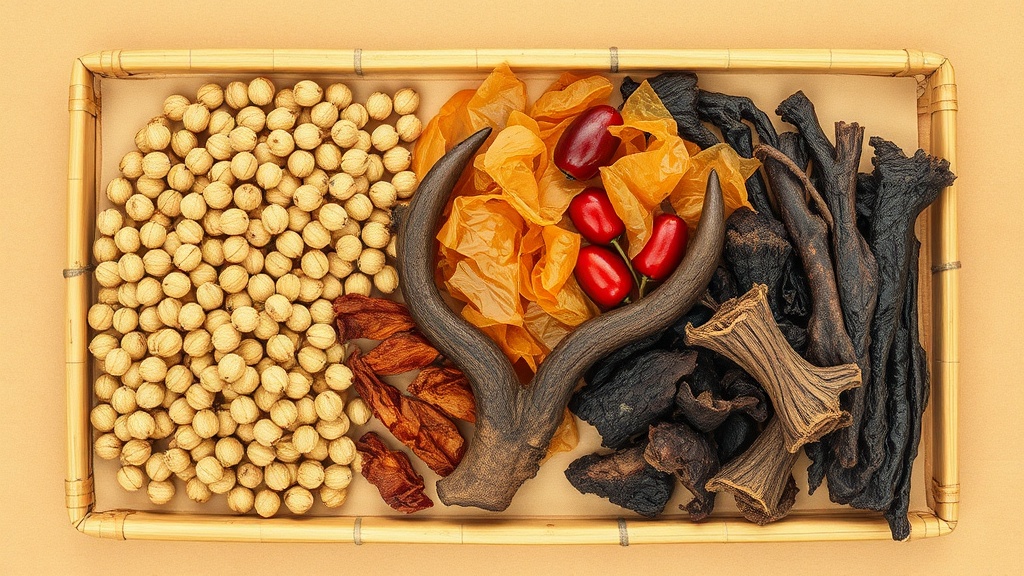
- Tu Si Zi (Tú Sī Zǐ, 菟丝子) — dodder seed. The classical herb for night blindness and visual failure from Kidney deficiency. Classical texts note Tu Si Zi specifically for “seeing in the dark” — a direct clinical correspondence with rod photoreceptor function, the primary cell type lost in RP. It tonifies both Kidney Yin and Kidney Yang, making it a balanced Jing-building herb suitable for extended use across different constitutional phases of RP.
- Lu Jiao Jiao (Lù Jiǎo Jiāo, 鹿角胶) — deer antler gelatin. One of the most powerful Jing and Yang tonics in the classical materia medica. It builds deep essence at the constitutional level, warms Kidney Yang, and replenishes Jing simultaneously. Indicated when Yang deficiency signs emerge in advanced RP — the colding, the nocturia, the pallor that signals the transformation from pure Yin-Jing depletion into mixed territory.
- Gou Qi Zi (Gǒu Qǐ Zǐ, 枸杞子) — wolfberry. The classical Liver-Kidney Yin-Blood tonic and the traditional “eye herb” — noted in classical texts for brightening the eyes and nourishing the visual substrate from the Liver-Kidney axis. Builds the Blood that feeds the optic nerve and remaining retinal vasculature. Used throughout the course of RP treatment as a foundational Liver Blood tonic alongside the deeper Jing-building herbs.
- Shu Di Huang (Shú Dì Huáng, 熟地黄) — cooked rehmannia. The quintessential Kidney Jing-building herb in the classical materia medica. Classical formulas for essence depletion — particularly for visual decline from Kidney root deficiency — anchor on Shu Di Huang as the primary tonic substance. Rich, sweet, and deeply nourishing, it builds Kidney Jing and Blood simultaneously and is the Yin-axis counterpart to Tu Si Zi’s balanced Yin-Yang building action.
Formula design for RP is long-horizon. We typically reassess every 4–6 weeks in the first year, adjusting the ratio of Jing-building to Blood-nourishing to Yang-warming as the pattern evolves through the course of treatment.
Functional Medicine: Neuro-Optic Mitochondrial and Antioxidant Support
The photoreceptor outer segment is the most metabolically active tissue in the body — per gram of tissue, more mitochondria-dependent than cardiac muscle. In RP, this metabolic demand is compounded by the ATP requirements of the rhodopsin cycle occurring in cells that are already under Jing-depletion constitutional stress. The functional medicine layer at Makari addresses this metabolic environment directly:
- Acetyl-L-Carnitine (ALCAR): Supports mitochondrial energy production in the photoreceptor layer; studied for neuroprotective effects in progressive retinal conditions. Addresses the neuro-optic mitochondrial axis — the Water/Kidney functional sphere in the classical-functional integrated model.
- Astaxanthin: A potent carotenoid antioxidant that crosses the blood-retinal barrier. Among the most studied antioxidants for photoreceptor protection; addresses the retinal pigment epithelium’s oxidative load, which is chronically elevated in RP as RPE cells struggle to manage increasing quantities of shed outer-segment material from dying photoreceptors.
- Lutein and zeaxanthin: Macular carotenoids that form the macula’s primary antioxidant layer. As RP progresses toward central vision, macular carotenoid support becomes increasingly relevant — protecting the cone photoreceptors that remain functional longer than the rod periphery.
- Omega-3 fatty acids (DHA/EPA): DHA is the dominant fatty acid in the photoreceptor outer-segment membrane, constituting approximately 50% of its total fatty acid content. EPA provides anti-inflammatory support for the retinal microenvironment. Both are relevant to the structural membrane integrity of the photoreceptors that remain.
Supplement selection, like herb selection, is pattern-matched. Not every RP patient receives all four — the intake determines which functional sphere is most compromised in the individual picture, and the protocol is designed accordingly.
An Honest Word on What Chinese Medicine Can and Cannot Do for RP
Herbal medicine cannot alter the genetic trajectory of retinitis pigmentosa. Gene therapy trials — particularly for RPE65, RPGR, and CNGB3 mutations — offer the most promising structural intervention for certain genotypes, and we encourage every RP patient we see to understand their mutation and monitor clinicaltrials.gov for trial availability. The classical approach aims at something different and more modest: supporting the constitutional terrain, slowing the rate of Jing depletion, and optimizing retinal function within the limits of the hereditary condition.
Some patients report stabilization — periods where visual field progression appears to slow or plateau. Outcomes are individual, they cannot be predicted at intake, and they require genuine long-term commitment. We will never promise otherwise. What we offer is a clinically rigorous, honest, long-term partnership in the management of this condition — a partnership that treats the whole person, addresses the constitutional root, and does not pretend that addressing the root is the same thing as undoing the hereditary fact.
Curious? Let’s Talk.
If you or someone you love is navigating retinitis pigmentosa and wondering what integrative acupuncture and herbal support might look like, we’d love to have that conversation.
The M48 protocol isn’t a promise — it’s a conversation. One grounded in classical theory, clinical experience, and an honest engagement with the evolving science.
Makari Wellness — Michael Woodworth, M.S., L.Ac. (established 2005)
Specializing in degenerative eye disease via the M48 protocol
Call us: (888) 871-8889
Book online: makariwellness.com/book-appointment
Oceanside: 2111 S. El Camino Real, Suite 301, Oceanside, CA 92054
San Diego: 16486 Bernardo Center Drive, Suite 218, San Diego, CA 92128
This content is educational and does not constitute medical advice. Acupuncture and herbal medicine are not replacements for conventional ophthalmologic care. Always continue your care with your ophthalmologist.