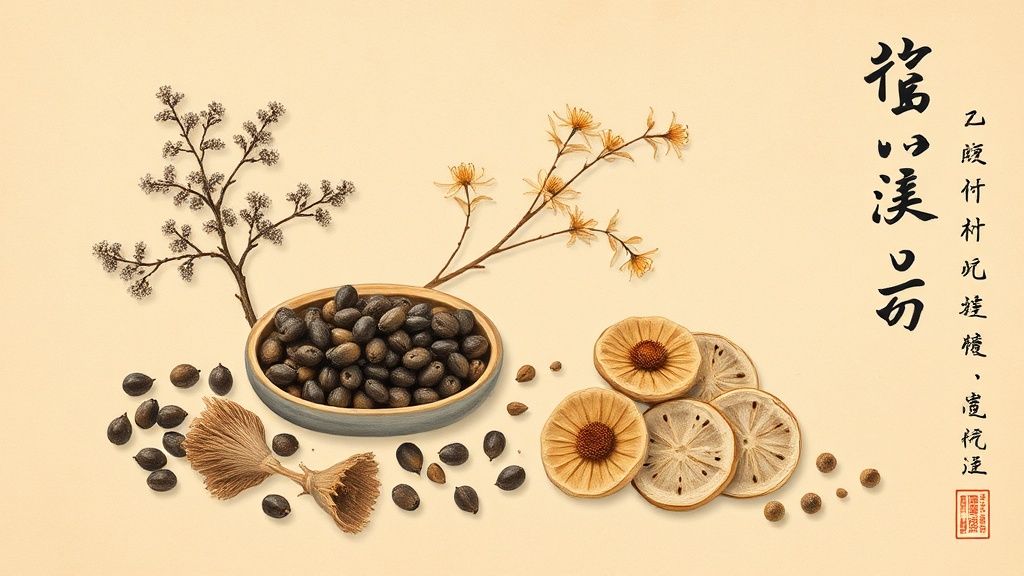


Cataracts and Chinese Medicine: Clearing the Turbidity Before Surgery Is the Option
When the Lens Clouds: Understanding Cataracts Through a Chinese Medicine Lens
For most people, cataracts begin quietly. A slight haziness that you attribute to an overcast day. A glare from headlights that seems worse than it used to. A blur that glasses don’t quite fix. The lens of the eye — ordinarily crystal-clear, precisely curved to focus light onto the retina — has begun to lose its transparency. Over months and years, the clouding deepens. Halos appear around lights. Colors flatten. Reading becomes an effort.
Cataract surgery is one of the most successful procedures in all of medicine. When the lens has clouded enough to significantly impair daily function, surgery is the right call, and we say so plainly. But many patients arrive in our clinic in an earlier window — early to intermediate cataracts, where surgery isn’t yet indicated but the changes are detectable and progressive. This is where Chinese medicine has something to offer: not a surgical alternative, but a framework for understanding the constitutional terrain driving the clouding, and a set of tools for supporting that terrain while the window remains open.
What Conventional Medicine Sees — and What TCM Adds
Conventional ophthalmology monitors cataracts and intervenes surgically when vision impairment reaches the clinical threshold. Beyond UV protection and smoking cessation, there is currently no medical treatment that slows cataract progression — this gap is well recognized in the field. For patients in the early-to-intermediate window who want to actively engage their condition, classical Chinese medicine offers a constitutional framework that conventional ophthalmology does not currently provide.
It does so not by promising to dissolve a cataract — that is not a claim this medicine makes — but by addressing the organ-system imbalances that, in classical theory, generate lens turbidity in the first place. Understanding those patterns changes how you support the lens environment during the window when support is most relevant.
Three TCM Patterns That Drive Cataract Formation
Classical Chinese medicine does not view the cataract as a local lesion in isolation. The lens depends on the finest, most refined Yin fluids in the body — Liver Blood and Kidney Essence — to remain transparent. When those fluids are insufficient, or when turbidity accumulates unchecked, the lens cannot maintain its clarity. Three patterns are most commonly seen:
Liver-Kidney Deficiency (Gān Shèn Bù Zú, 肝肾不足)
The constitutional root pattern in the majority of age-related cataracts. The Liver governs the eyes; the Kidney stores the Essence (Jīng, 精) that produces Liver Blood. When both are insufficient — as they naturally become with age, overwork, chronic illness, or inadequate rest — the fine fluid substrate that keeps the lens crystalline is depleted. The classical teaching is apt: “the lens is the most refined fluid in the eye.” When the Yin substrate thins, the lens loses its clarity from within.
Damp-Phlegm Turbidity (Shī Tán Mù Zhàng, 湿痰目障)
The Spleen (Pí, 脾) governs transformation and transportation of fluids throughout the body. When Spleen function is compromised — by diet, overthinking, cold foods, or constitutional weakness — fluids fail to transform cleanly. Phlegm (Tán, 痰) and Dampness (Shī, 湿) accumulate. In the eye, this pattern underlies the clouding and opacity picture: turbidity forming where clarity should reside. Patients with this pattern often present with other signs of Damp accumulation alongside the lens changes — mental fogginess, physical heaviness, and digestive sluggishness.
Spleen Qi Deficiency (Pí Qì Xū, 脾气虚)
A related but distinct pattern. “When clear Yang (Qīng Yáng, 清阳) fails to ascend, turbidity (Zhuó, 濁) accumulates above.” The Spleen’s lifting function brings clean, refined nourishment to the sense organs — including the eyes. When Spleen Qi is insufficient, clear Yang cannot rise, and turbidity settles in its place. This pattern frequently accompanies the Damp-Phlegm picture and is addressed together with it clinically.
The Five Wheels: Why Cataracts Are a Spleen and Liver Story
The classical Five Wheels (Wǔ Lún, 五輪) map each region of the eye to an organ system. Two Wheels are directly relevant in cataracts:
- The Flesh Wheel (Ròu Lún, 肉輪) — the eyelids — corresponds to the Spleen. The Spleen governs flesh and the clear-turbid separation function; its failure underlies the turbidity that accumulates in the lens.
- The Wind Wheel (Fēng Lún, 風輪) — the iris and cornea — corresponds to the Liver. The lens sits within the Liver’s domain; Liver Yin and Blood nourishment is essential to lens clarity.
Dzung’s Five Regions of the Eye reinforce this clinical map: the eyelids are Earth/Spleen (clear-turbid separation); the iris is Wood/Liver (fluid nourishment). Cataracts sit at the intersection of both — Liver-Kidney fluid depletion at the constitutional root, Spleen-Phlegm turbidity in the local expression.
Acupuncture for Cataracts: The M48 Protocol
Makari’s specialty for eye disease is MA48 (Micro Acupuncture 48), a 48-point distal microsystem developed by Andy Rosenfarb, ND, LAc. MA48 maps the body holographically onto 24 hand points and 24 foot points through the ECIWO principle (Embryo Contains Information of the Whole Organism, Prof. Yingqing Zhang). Treatment is entirely distal — no needles near or around the eye.
Cataracts fall within the MA48 Drying classification: conditions driven by Yin-substance depletion and failure of the turbidity-transformation function, rather than by active bleeding or acute pressure. The condition-specific protocol:
- LR-A (Liver distal, Yang/functional) — the primary eye point across virtually all conditions; governs the sensory and functional dimension of the Liver-eye connection; directly supports Liver Blood nourishment to the lens domain
- SP-A / SP-B (Spleen distal and proximal) — addresses the clear-turbid separation failure at both the functional and constitutional level; SP-A for the active Spleen deficit, SP-B for the deeper constitutional Spleen root
- KI-B (Kidney proximal, Yin/constitutional) — nourishes Kidney Essence; the constitutional root from which Liver Blood draws; the foundational Yin-replenishment point for the lens substrate
In MA48, A points address the functional/sensory layer (excess, acute, Yang); B points address the structural/constitutional layer (deficiency, chronic, Yin). Cataract patients are almost always in the deficiency-root picture — B points, particularly KI-B and SP-B, carry the structural weight of the treatment. LR-A addresses the Liver-eye sensory connection directly. Points are located by palpation for reactivity; needle placement is at approximately 45°, periosteum contact, 34-gauge half-inch, 30-minute retention. Response is typically expected within one to four treatments. Approximately 15% of patients do not respond — we communicate this honestly at the outset.
Scalp Acupuncture and Electroacupuncture: Enhancing Visual Cortex and Periocular Circulation
Complementing the M48 distal protocol, we incorporate scalp acupuncture at the Vision Area — the Occipital Vision Area (Zhěn Shàng Shìjué Qū, 枕上視覺區) from the Dr. Karl Tai lineage, located 1 cm lateral to the external occipital protuberance, 4 cm superior. Three to five needles (Vision Three Needles / Shì Sān Zhēn, 視三針) are placed targeting the cortical visual cortex representation. For cataracts specifically: Vision Area 3–5 needles, combined with BL-2 (Zanzhu, 攢竹) and SJ-23 (Sizhukong, 絲竹空) at the periorbital level for local circulation support around the lens environment.
Electroacupuncture is applied to the Vision Area needles using a Dense-Disperse wave — the “Pulling Qi Method” (Chōu Qì Fǎ, 抽气法) of the Tai lineage. For chronic degenerative conditions like cataracts, we work in the 1–4 Hz low-frequency range: associated with parasympathetic regulation, sustained tissue remodeling support, and enhanced retinal and periocular blood flow. Many patients report a subjective “brightening” sensation during the Vision Area electro session. Sustained improvement is a course-of-treatment outcome, not a single-session expectation.
Chinese Herbal Medicine for Cataracts
The classical herbal ophthalmology tradition identified specific herbs for lens opacity and turbidity that remain in active clinical use. Formula composition is always individualized to the patient’s complete pattern — no single formula fits every cataract patient — but the following herbs illustrate the core categories:
- Mi Meng Hua (Mì Méng Huā, 密蒙花) — buddleja flower; one of the most classically documented herbs for “screen over the eye” (mù zhàng) presentations; clears Liver Heat, brightens the eyes, and is specifically referenced in classical ophthalmology texts for opacity and turbidity conditions. This is the leading cataract-specific herb in the classical repertoire.
- Jue Ming Zi (Jué Míng Zǐ, 决明子) — cassia seed; Liver-clearing and vision-brightening; the name itself (jué míng — “to resolve brightness”) signals its classical indication; one of the most documented anti-opacity herbs in the tradition
- Ju Hua (Jú Huā, 菊花) — chrysanthemum flower; clears Liver Heat and disperses Wind, brightens and soothes the eye; a foundational eye herb present in virtually every classical formula for Liver-pattern eye conditions
- Gou Qi Zi (Gǒu Qǐ Zǐ, 枸杞子) — wolfberry; nourishes Liver and Kidney Yin-Blood; directly supports the fluid substrate from which the lens draws its clarity; among the best-documented classical eye-brightening and Yin-tonifying herbs
- Cang Zhu (Cāng Zhú, 苍术) — atractylodes rhizome; dries Dampness and strengthens Spleen; addresses the turbidity-transformation failure when the Damp-Phlegm pattern is a primary layer; provides an essential Drying action to balance the Yin-nourishing herbs in the formula
Functional Medicine: Supporting the Antioxidant Lens Environment
Cataract formation is fundamentally an oxidative process. The crystallin proteins of the lens require a highly reduced, antioxidant-rich environment to remain transparent. When oxidative stress exceeds the lens’s repair and protective capacity — through cumulative UV exposure, metabolic stress, smoking, or simply aging — crystallin proteins aggregate and cross-link. The lens clouds. This is the molecular biology of cataracts, and it identifies exactly where targeted antioxidant support is most relevant.
From a functional medicine standpoint, the antioxidant support category for the lens includes:
- N-Acetyl Cysteine (NAC) — a precursor to glutathione; glutathione is the primary endogenous antioxidant system in the lens; intralenticular glutathione depletion is a consistent finding in cataract development, and NAC supports replenishment of this protective system
- Vitamin C — found at high concentrations in the aqueous humor that bathes the lens; the aqueous humor Vitamin C gradient is one of the lens’s primary antioxidant defenses; dietary and supplemental Vitamin C supports this gradient
- Vitamin E — membrane-protective, lipid-phase antioxidant; part of the lens’s fat-soluble antioxidant architecture; works synergistically with Vitamin C in the aqueous environment
Nutrition guidance runs parallel: antioxidant-dense, colorful vegetables; minimizing sugar and refined carbohydrates, which accelerate lens glycation alongside oxidative damage; adequate hydration. The dietary picture that supports clean Spleen transformation — warm, cooked foods; regular meals; minimal cold, raw, or greasy — maps directly onto the functional medicine recommendation for a metabolic environment that reduces Phlegm accumulation and supports lens clarity.
What the Research Shows
A 2026 systematic review in Frontiers in Medicine by Bautista-Hernández MA and colleagues examined existing clinical studies on acupuncture for inflammation-related and degenerative ocular conditions. Their honest conclusion: current evidence is insufficient to make definitive claims — studies are heterogeneous, sample sizes small, and methodology varied. This is not a verdict against acupuncture. It is a call for better, more standardized integrative research. We hold that same honest posture in our own clinical work. Frontiers in Medicine, 2026.
What we can say is this: cataracts are ultimately surgical once they significantly impair visual function. Chinese medicine’s role is in the early-to-intermediate window — supporting the constitutional terrain, addressing the Damp-Phlegm turbidity pattern, and optimizing the antioxidant lens environment while that window remains clinically relevant. That is the conversation we offer.
Curious? Let’s Talk.
If you or someone you love is navigating early or intermediate cataracts and wondering what integrative acupuncture and herbal support might look like, we’d love to have that conversation.
The M48 protocol isn’t a promise — it’s a conversation. One grounded in classical theory, clinical experience, and an honest engagement with the evolving science.
Makari Wellness — Michael Woodworth, M.S., L.Ac. (established 2005)
Specializing in degenerative eye disease via the M48 protocol
Call us: (888) 871-8889
Book online: makariwellness.com/book-appointment
Oceanside: 2111 S. El Camino Real, Suite 301, Oceanside, CA 92054
San Diego: 16486 Bernardo Center Drive, Suite 218, San Diego, CA 92128
This content is educational and does not constitute medical advice. Acupuncture and herbal medicine are not replacements for conventional ophthalmologic care. Always continue your care with your ophthalmologist.