

Arthritis through the Bi (痹) syndrome lens — five patterns, five formulas
Why there’s no one “arthritis herb,” and what classical Chinese medicine actually looks at when joints hurt.
If you’ve ever stood in a supplement aisle staring at “joint support” bottles — turmeric, glucosamine, boswellia, MSM, collagen — and wondered why nothing on the shelf has worked the same way twice, classical Chinese medicine has a clean answer for that. It doesn’t read arthritis as a single condition. It reads every joint complaint as a question of what is obstructing the channels. Different obstructions demand different tools. Same joint pain, very different formulas.
The framework is called Bi (痹) — literally “obstruction” or “painful obstruction” — and it’s been the working clinical map for joint disease since the Huang Di Nei Jing (~200 BCE). Chapter 43 of the Su Wen opens the doctrine: “Wind, cold, and damp arrive together and combine into Bi.” Heat was added by later authors, and chronic cases were eventually understood as rooted in Liver and Kidney depletion at the bone level. Five patterns, in clinical use today.
This post walks each pattern, the classical formula matched to it, and how the same modern Western diagnosis — osteoarthritis, rheumatoid arthritis, gout — can sit in different patterns depending on what’s actually driving the case.
The Western framing — and where it gets thin
Modern medicine sorts joint disease by tissue mechanism and immune profile:
- Osteoarthritis (OA) — cartilage degeneration, synovial fluid loss, mechanical wear. Most common above 50.
- Rheumatoid arthritis (RA) — autoimmune synovitis, often symmetric, often hot/swollen joints, frequently in hands and feet.
- Gout — uric acid crystal deposition, classically the big toe, acutely red and hot.
- Psoriatic arthritis, ankylosing spondylitis, post-viral arthralgia — each with its own immune signature.
The Western frame is excellent for diagnosis, imaging, and pharmacologic intervention. Where it gets thin: it doesn’t distinguish which patient with the same diagnosis will respond to which herbal protocol. Two patients with OA of the knee — one has a fixed deep ache that worsens in winter and feels better with a heating pad; the other has a hot swollen knee that flares after a stressful day. Same MRI, very different classical pictures. The first is Cold-Damp Bi with Bone-Bi features; the second is Heat-Bi.
The pattern frame does not replace medical management. It adds a layer of differentiation that determines which herbal formula is actually appropriate.
A supplement-aisle note
Generic “anti-inflammatory” supplements — curcumin, omega-3, MSM, boswellia — have a defensible safety profile and modest evidence in some arthritis populations. They are not pattern-matched. A turmeric capsule used in a Wind-Cold-Damp Bi presentation may do little; the same capsule in a Heat-Bi presentation may help marginally because of its bitter-cooling action. The mismatch isn’t that supplements “don’t work” — it’s that without pattern differentiation, you’re rolling dice on whether the tool fits the obstruction.
Classical herbal medicine is the inverse: less flexible, more matched. The decision tree is the formula, not the marketing.
The five patterns and their classical formulas
1. Wind-Bi (行痹) — wandering pain
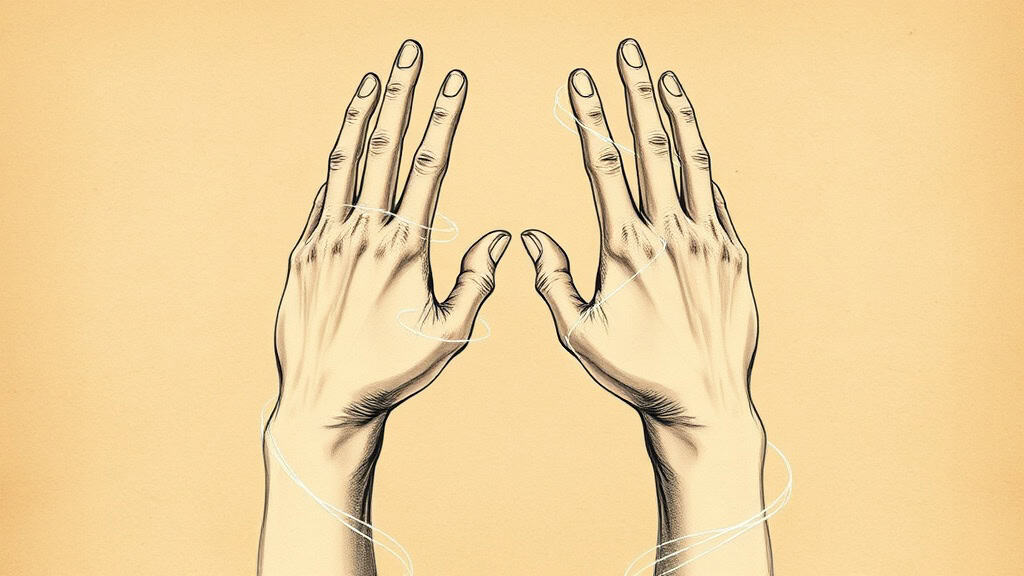
The picture. Joint pain that moves around — today the wrist, next week the shoulder, then the knee. Pain doesn’t stay in one place. Often worse with weather changes or wind exposure. Cases that look like early or migratory RA often map here, as do some early polyarthralgia presentations.
The classical name. Xíng Bì (行痹) — “wandering obstruction.” Wind is the lead pathogenic factor; its nature is mobility.
The formula. Juan Bi Tang (蠲痹汤, Remove Painful Obstruction Decoction) — from Yang Shi Jia Cang Fang (杨氏家藏方, Song Dynasty). Built around Qiang Huo (羌活) and Du Huo (独活) for wind-damp expulsion, with Dang Gui (当归) and Chuan Xiong (川芎) to move blood, and Huang Qi (黄芪) to support defensive Qi so the wind has something to push against. A working formula for upper-body wind-predominant Bi.
2. Cold-Bi (痛痹) — fixed, sharp, severe pain

The picture. Sharp, severe pain in one joint — often a fixed location. Cold to the touch. Strong relief from heat, sharp aggravation from cold. Patient may describe it as “biting” or “stabbing.” Chronic OA in a winter-aggravated presentation often sits here, as do some chronic post-injury joint pains.
The classical name. Tòng Bì (痛痹) — “painful obstruction.” Cold is the lead pathogenic factor; its nature is contraction and intense pain.
The formula. Wu Tou Tang (乌头汤, Aconite Main Tuber Decoction) — from Zhang Zhongjing’s Jin Gui Yao Lue (~200 CE). Uses Chuan Wu (川乌, processed aconite root) with Ma Huang, Bai Shao, Huang Qi, and Zhi Gan Cao. This is a prescriber-only formula. Aconite is a high-toxicity herb that requires processing, careful dosing, decoction technique, and ongoing monitoring — it is never appropriate for self-administration or unsupervised use. The point of naming it here is that classical doctrine knew how to address severe Cold-Bi pain, and the protocol exists in trained hands.
3. Damp-Bi (着痹) — heavy, fixed, swollen
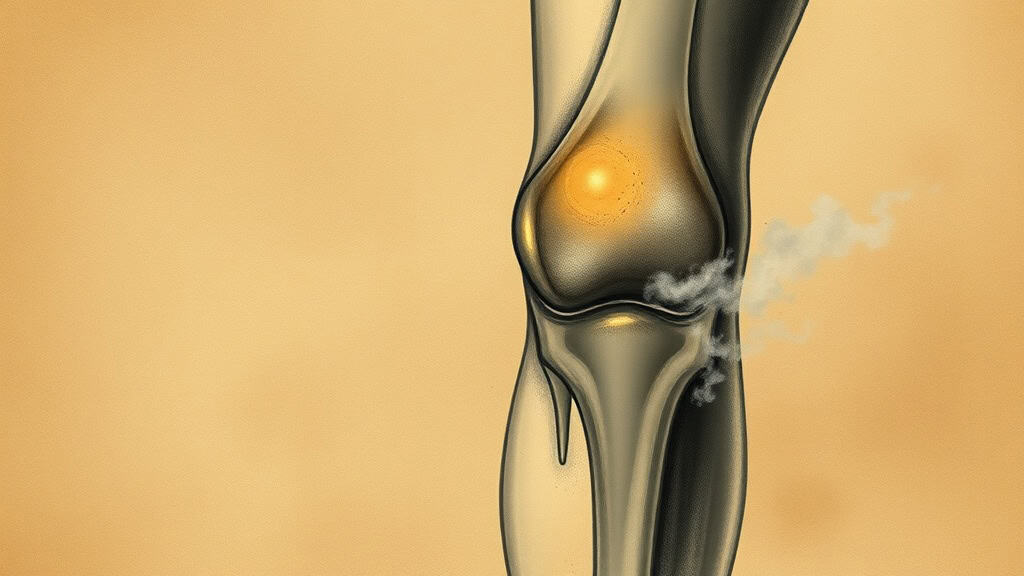
The picture. A heavy, soggy feeling in the joints. Swelling without much redness. Worse in humid weather. The patient may describe the joint as “stuck” or feeling “waterlogged.” Lower-body predominant: knees, ankles, feet. Often shows up alongside other damp-stagnation signs — heavy fatigue after meals, a thick coating on the tongue.
The classical name. Zhuó Bì (着痹) — “fixed/sticky obstruction.” Dampness is the lead pathogenic factor.
The formulas. When pure damp is the issue, the classical approach is to dry damp with bitter-warming herbs. When damp combines with heat — extremely common in modern lower-extremity presentations — the formulas of choice are the San Miao / Si Miao San family.
- San Miao San (三妙散, Three Marvel Powder) — Yu Tuan, Yi Xue Zheng Chuan (醫學正傳, 1515 CE). Three herbs: Cang Zhu (苍术, dries damp), Huang Bai (黄柏, clears damp-heat from the lower burner), Niu Xi (牛膝, directs treatment to the lower body).
- Si Miao San (四妙散, Four Marvel Powder) — Zhang Bingcheng, Cheng Fang Bian Du, Qing dynasty. Adds Yi Yi Ren (薏苡仁) to the three above, strengthening the damp-draining and joint-clearing action.
A classical workhorse for hot, swollen lower-body joint presentations — particularly common in gout flares and lower-body OA with damp-heat features.
4. Heat-Bi (热痹) — hot, red, acutely swollen
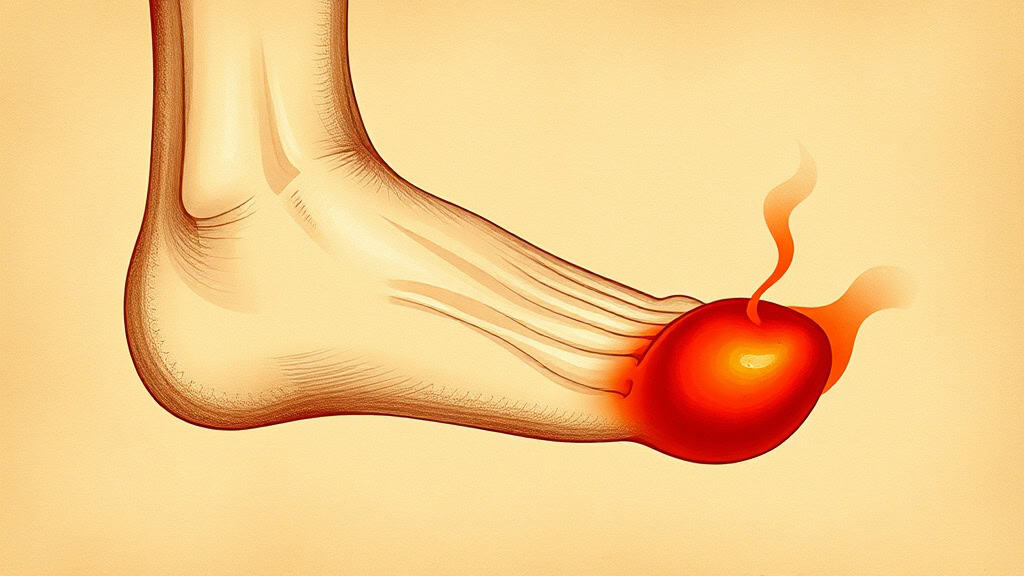
The picture. Hot to the touch. Visibly red. Acute swelling. Often severe, often sudden in onset. The patient avoids covering the joint; cool packs help, heat makes it dramatically worse. Gout flares are the textbook presentation. Active RA flares often map here, as do hot-phase reactive and post-infectious arthritis.
The classical name. Rè Bì (热痹) — “hot obstruction.”
The formula. Gui Zhi Shao Yao Zhi Mu Tang (桂枝芍药知母汤, Cinnamon Twig, Peony, and Anemarrhena Decoction) — from Jin Gui Yao Lue (~200 CE). This is the classical formula for wind-cold-damp Bi that has transformed into heat — a complex pattern where the joint is hot but the channel pathology is still mixed. It uses Gui Zhi (桂枝) to open the channels, Zhi Mu (知母) to clear the heat, Bai Shao (白芍) to soften and ease, and Fang Feng / Ma Huang to disperse residual wind-cold-damp. For purer Heat-Bi with strong systemic heat signs, Bai Hu Jia Gui Zhi Tang (白虎加桂枝汤) — White Tiger Decoction plus Cinnamon Twig, also from Jin Gui Yao Lue — is the classical reach.
5. Bone-Bi (骨痹) with Liver-Kidney deficiency — chronic, deep, structural
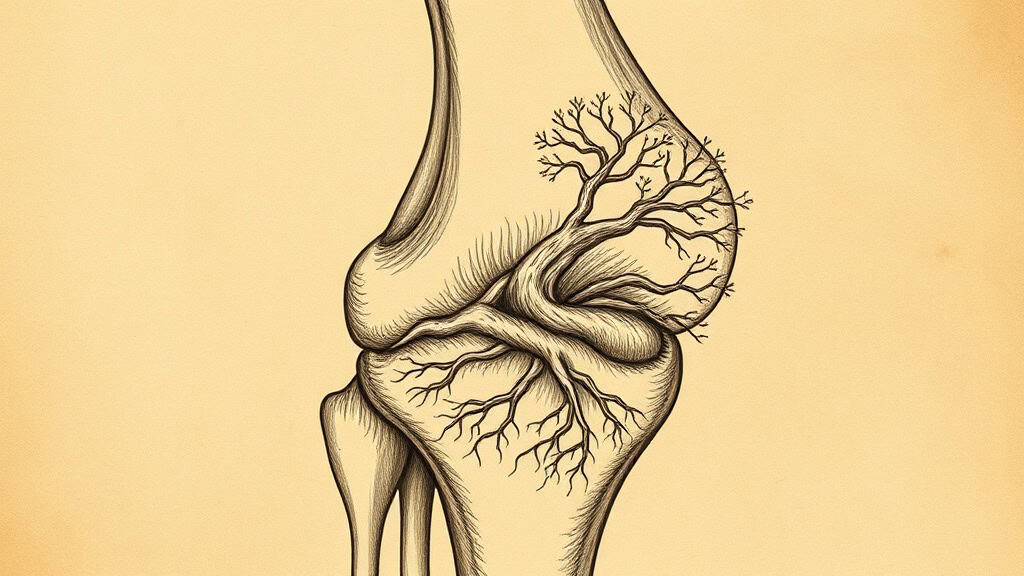
The picture. Long-standing joint disease with structural change visible on imaging — cartilage loss, bone spurs, joint-space narrowing. Lower-back ache, weak knees, declining grip strength. Often patients in their 60s and beyond. Frequently overlaps with low bone density, gray hair, hearing changes, and a sense that the foundation of the body has thinned. Chronic OA at the structural-degeneration end of its spectrum maps directly here.
The classical name. Gǔ Bì (骨痹) — “bone-level obstruction.” This isn’t a new pathogenic factor; it’s the depth-progression of long-standing Bi, rooted in Liver-Kidney depletion. The Kidney governs bones; the Liver governs sinews and joints. When both are thin, the joints have no substrate to maintain themselves on.
The formula. Du Huo Ji Sheng Tang (独活寄生汤, Angelica Pubescens and Loranthus Decoction) — Sun Simiao, Bei Ji Qian Jin Yao Fang (备急千金要方, 652 CE). A long ingredient list (15 herbs in the classical version) that does two jobs in one formula: clears wind-cold-damp from the channels AND tonifies Liver-Kidney to repair the substrate. Includes Du Huo (独活), Sang Ji Sheng (桑寄生), Du Zhong (杜仲), Niu Xi (牛膝), Qin Jiao (秦艽), Fang Feng (防风), Xi Xin (细辛), and a Si Wu Tang (Four Substance Decoction) blood-tonic backbone. The classical reach for chronic lower-body arthritis with structural decline — and probably the most-used formula in modern practice for OA in the 50+ population.
How patterns map onto Western diagnoses
The same Western diagnosis lands in different patterns depending on the patient. A working translation table for the most common cases:
| Western diagnosis | Common pattern landings | |—|—| | Osteoarthritis (winter-aggravated, cold-feeling joint) | Cold-Bi + Bone-Bi | | Osteoarthritis (hot, swollen knee or ankle, especially with damp body type) | Damp-Heat / Si Miao San family | | Osteoarthritis (60+, structural change, weak back/knees) | Liver-Kidney-deficient Bone-Bi | | Rheumatoid arthritis (acute flare, hot swelling, symmetric) | Heat-Bi / Wind-Damp-Heat | | Rheumatoid arthritis (chronic stable, deformative) | Bone-Bi with residual Wind-Damp | | Gout (classic hot red swelling of the big toe) | Heat-Bi (often + Damp-Heat) | | Migratory polyarthralgia, early or seronegative | Wind-Bi | | Post-viral / post-injury arthralgia in a cold pattern | Cold-Bi |
This is not a substitute for a careful in-clinic differentiation. Patients commonly land in layered patterns — Cold-Bi on a base of Liver-Kidney deficiency, or Damp-Heat with underlying Spleen-Qi insufficiency. The formula plan layers accordingly.
Acupuncture in Bi syndrome
Beyond herbs, acupuncture has a specific role in Bi: open the channel, move blood at the joint, and address the root pattern at points like GB-34 (Yang Ling Quan, 阳陵泉) for sinews, BL-17 (Ge Shu, 膈俞) for blood, and ST-36 (Zu San Li, 足三里) for Qi and Blood substrate. Local Ah Shi (阿是) points at the painful joint are standard. For Liver-Kidney-deficient Bone-Bi, BL-18 (Liver Shu) and BL-23 (Kidney Shu) anchor the root treatment. Electroacupuncture at the joint amplifies the local channel-opening action — useful particularly for chronic OA and stable RA.
Why this matters at the patient level
The takeaway is not “try Chinese herbs for arthritis.” It’s: there is no one arthritis herb. The herbs work when the formula matches what is actually obstructing the joint. Treatment design starts with pattern differentiation, not with the Western diagnosis. The Western diagnosis tells you what tissue is involved; the pattern tells you what protocol will move the case.
A practitioner trained in classical herbal medicine differentiates which Bi pattern is driving the case in front of them, layers in root patterns (Liver-Kidney deficiency, Spleen damp accumulation, Blood stasis from chronic obstruction), and selects the formula. Modifications are made for the individual — adjusting dose, swapping herbs, and adding pattern-specific support — every cycle.
Citations
- Huang Di Nei Jing — Su Wen Chapter 43, “Bi Lun” (痹论) — original doctrine of Wind-Cold-Damp Bi (~200 BCE, compiled tradition).
- Jin Gui Yao Lue (金匮要略), Zhang Zhongjing, ~200 CE — sources for Wu Tou Tang, Gui Zhi Shao Yao Zhi Mu Tang, and Bai Hu Jia Gui Zhi Tang.
- Bei Ji Qian Jin Yao Fang (备急千金要方), Sun Simiao, 652 CE — source for Du Huo Ji Sheng Tang.
- Yi Xue Zheng Chuan (醫學正傳), Yu Tuan, 1515 CE — source for San Miao San.
- Cheng Fang Bian Du (成方便讀), Zhang Bingcheng, Qing dynasty — source for Si Miao San.
- Yang Shi Jia Cang Fang (杨氏家藏方), Song dynasty — source for Juan Bi Tang.
- Vault references —
tcm/bi-syndrome.md,tcm/juan-bi-tang.md,tcm/wu-tou-tang.md,tcm/gui-zhi-shao-yao-zhi-mu-tang.md,tcm/san-miao-san.md,tcm/si-miao-san.md,tcm/du-huo-ji-sheng-tang.md,tcm/du-huo.md,tcm/qin-jiao.md,tcm/fang-feng.md,tcm/bai-hu-jia-gui-zhi-tang.md,tcm/gan-cao-fu-zi-tang.md.
Herbs and formulas referenced here are named at the classical / clinical-reference level. Herbal therapy is most appropriate when prescribed by a practitioner trained in pattern differentiation; some formulas (Wu Tou Tang in particular) require processing and supervision and are not appropriate for self-administration. This article is educational and does not constitute medical advice.
When to come in
Joint disease is one of the conditions classical Chinese medicine has the deepest reach on — both at the chronic Bone-Bi end (Du Huo Ji Sheng Tang in a 60-year-old with OA + low back depletion) and at the acute Heat-Bi end (Gui Zhi Shao Yao Zhi Mu Tang for an RA flare). If you’re navigating arthritis and have wondered whether classical herbal medicine and acupuncture could be a fit — either as a stand-alone protocol or alongside what your rheumatologist or PCP is already doing — an in-clinic visit is the right starting point. Pattern differentiation isn’t something a supplement aisle can do for you.
Makari Wellness — Oceanside · Rancho Bernardo · acupuncture and classical herbal medicine. Practitioner: Michael Woodworth, M.S., L.Ac. (established 2005). Book: makariwellness.com/book-appointment/ · Call: (888) 871-8889